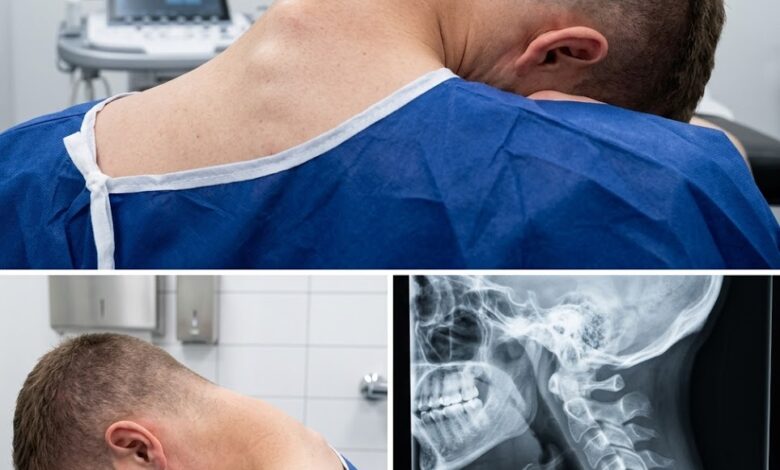
The Journal of Orthopaedic Case Reports published a remarkable and deeply concerning medical case involving an 18-year-old industrial worker in India who suffered a devastating cervical spine injury after a heavy metallic object fell directly onto the front of his head while he was performing his job.
The tremendous force of the impact caused an extremely rare and catastrophic injury to the upper cervical spine—the part of the neck responsible for supporting the head and protecting the spinal cord. Trauma to this region is among the most dangerous injuries a person can experience, as it can affect movement, breathing, and other vital body functions. Even a slight delay in treatment can dramatically increase the risk of permanent disability or death.
The young worker was rushed to the hospital, where doctors conducted emergency examinations and imaging studies to determine the full extent of the damage. The unusual nature of the injury presented a significant challenge, requiring careful planning by orthopedic and spine specialists before any treatment could begin. Managing such complex cervical spine injuries demands exceptional precision, as even minor errors can have life-altering consequences.
Because injuries of this type are so uncommon, the medical team documented the case for publication in the Journal of Orthopaedic Case Reports. Sharing rare cases like this helps surgeons and emergency physicians around the world learn from unusual injuries, improve treatment strategies, and prepare for similar situations in the future.
Beyond its medical significance, the incident also serves as a powerful reminder of the importance of workplace safety. Construction sites, factories, and industrial environments often involve heavy machinery and suspended materials, making proper protective equipment, safety protocols, and regular inspections essential for preventing life-threatening accidents.
This extraordinary case demonstrates both the devastating consequences that can result from a single workplace accident and the critical role of rapid emergency care, advanced imaging, and specialized surgical expertise. It also highlights how medical research continues to improve patient care by documenting rare injuries and sharing valuable clinical experiences that may one day help save another person’s life.