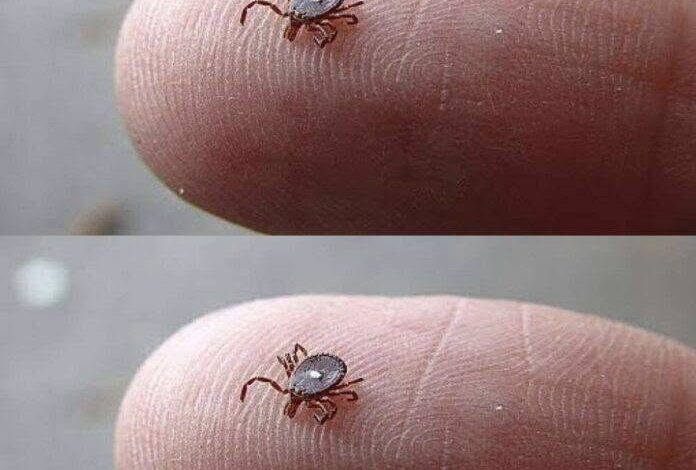
A family outing in nature took an unexpected turn when a mother noticed a tiny tick attached to her son’s leg after they returned from a walk. At first glance, it seemed like an ordinary tick, but one unusual feature immediately caught her attention—a single bright white spot on its back. Curious and concerned, she soon learned that this distinctive marking could identify the insect as a female Lone Star tick, a species that has drawn increasing attention from health experts.
The Lone Star tick is named for the white or silver dot found on the back of adult females. Although it is small and easy to overlook, this tick is found in parts of North America and can transmit several diseases and trigger unusual immune reactions. Because of its expanding range, people spending time in wooded, grassy, or brush-filled areas are encouraged to check themselves, their children, and their pets for ticks after spending time outdoors.
One of the most unusual health conditions associated with the Lone Star tick is alpha-gal syndrome. In some people, a bite from this tick can trigger an immune response that leads to an allergy to a sugar molecule called alpha-gal, which is found in meat and other products from mammals. As a result, affected individuals may develop allergic reactions several hours after eating foods such as beef, pork, lamb, or products containing ingredients from mammals. Symptoms can range from itching, hives, and stomach cramps to nausea, difficulty breathing, or, in rare cases, a severe allergic reaction that requires emergency medical care.
If you find an attached tick, experts recommend removing it as soon as possible using fine-tipped tweezers. Grasp the tick as close to the skin as you can and pull upward with steady, even pressure without twisting or jerking. After removal, clean the bite area and your hands thoroughly with soap and water or rubbing alcohol. Avoid crushing the tick with your fingers, and monitor the bite site and your health over the following days and weeks.
It’s important to remember that most tick bites do not result in serious illness, and finding a tick should not cause panic. However, anyone who develops fever, rash, unusual tiredness, muscle aches, swollen lymph nodes, or signs of an allergic reaction after a tick bite should seek medical advice promptly and inform their healthcare provider about the tick exposure.
The best protection is prevention. When spending time in wooded or grassy areas, wear long sleeves and long pants, use an EPA-registered insect repellent, stay on marked trails whenever possible, and perform a full-body tick check after returning indoors. Checking children, pets, clothing, and gear can help remove ticks before they have time to attach firmly.
A tiny white spot on a tick may seem insignificant, but recognizing it could encourage quicker action and greater awareness. Knowing how to identify ticks, remove them safely, and recognize potential symptoms can help you and your family enjoy the outdoors while reducing the risk of tick-related illnesses.