Purple Veins on Your Legs What They Mean Common Causes and When to See a Doctor……….

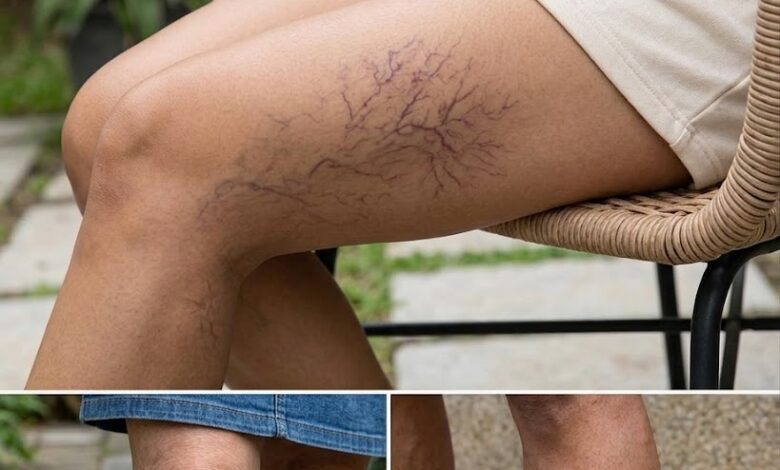
Purple veins on your legs may seem like nothing more than a cosmetic concern—but sometimes they can be a sign that your veins need a closer look.
They may begin as tiny purple, blue, or reddish lines that look like delicate webs. For some people, they remain harmless and cause no discomfort. For others, they can gradually become more noticeable and may be accompanied by aching, burning, itching, heaviness, or swelling.
Spider veins commonly appear on the thighs, calves, ankles, or behind the knees. Unlike varicose veins, they are usually small, flat, and close to the surface of the skin. They can become more common with age, family history, pregnancy, hormonal changes, weight gain, or spending long periods sitting or standing.
The important thing is to pay attention to changes and symptoms, not simply the color of the veins. Occasional visible veins may not be a cause for concern, but persistent swelling, aching, skin discoloration around the ankles, or areas of hardened skin should be discussed with a healthcare professional.
Some warning signs deserve faster attention. Sudden swelling in one leg, warmth, redness, tenderness, or unexplained sharp pain can be symptoms of a blood clot and should not be ignored. Seek urgent medical care if these symptoms appear, particularly when they develop suddenly.
Over time, ongoing problems with the veins can also contribute to skin changes or wounds that are slow to heal. Darkened or thickened skin near the ankles and persistent swelling may be associated with chronic venous insufficiency.
Simple habits can help support healthy circulation. Regular walking and movement, avoiding long periods in one position, and elevating your legs when resting may be beneficial. Compression stockings can also help some people, but they should be properly fitted and used with appropriate medical guidance.
And remember: not every purple vein means something serious. The goal is to recognize when a harmless-looking change is accompanied by symptoms that deserve medical attention.
If your veins are becoming more prominent, painful, swollen, or are accompanied by unusual skin changes, consider speaking with a doctor, dermatologist, or vein specialist. Getting the right evaluation can help determine whether you simply need reassurance, lifestyle changes, or treatment such as sclerotherapy or laser therapy.
Your legs may be giving you a small visual clue—knowing when to pay attention can make a big difference.