

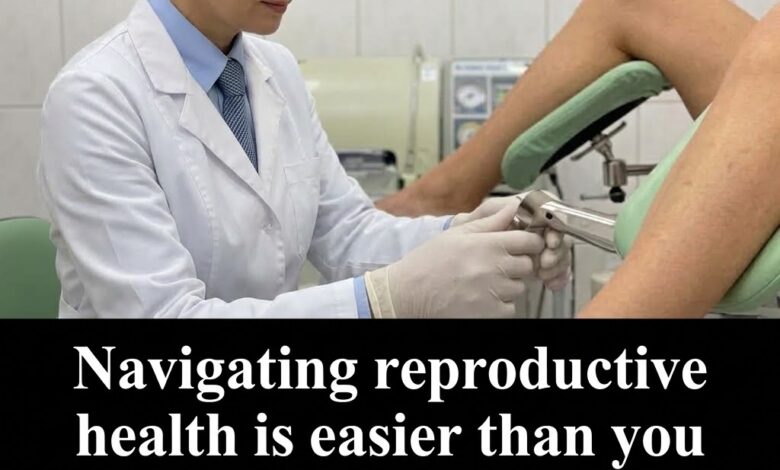
There is something oddly ordinary about a gynecologist’s office.
A desk.
A computer screen.
A blood-pressure machine.
A few medical instruments.
A paper gown folded carefully on an examination table.
Nothing about the room necessarily looks intimidating.
And yet, the moment you sit down, you may suddenly become much more aware of yourself.
Because this isn’t always a routine medical appointment in the emotional sense.
A gynecological visit can involve conversations about periods, pregnancy, contraception, fertility, sexual activity, menopause, unusual bleeding, discharge, pelvic pain, or symptoms that you may feel uncomfortable discussing with anyone.
Then there may be an examination.
You may need to change clothes.
The questions may become personal.
And suddenly, an otherwise confident person can feel surprisingly vulnerable.
That is exactly why preparing for the appointment should not be about trying to look perfect.
It should be about making sure you get the care you actually need.
And perhaps the first thing every patient should know is this:
You do not have to impress your gynecologist.
You don’t need freshly shaved legs.
You don’t need to schedule a wax.
You don’t need special intimate washes.
You don’t need perfume, sprays, or elaborate grooming.
And you certainly don’t need to apologize for the way your body naturally looks.
A gynecologist is there to provide medical care, not judge your appearance.
Body hair is normal.
Stretch marks are normal.
Scars are normal.
Skin comes in different shades and textures.
Vulvas naturally vary enormously in appearance.
Bodies sweat.
Bodies change.
Bodies are not supposed to look like carefully edited photographs online.
The examination room is not a beauty contest.
In fact, trying too hard to make the area look or smell “perfect” can sometimes create problems of its own. Harsh soaps, fragranced products, sprays, or excessive cleaning may cause irritation and disrupt the normal environment of the genital area.
There is no reason to scrub internally before an appointment.
Normal external hygiene is generally enough.
It may sound obvious, but embarrassment can make people do surprisingly complicated things before seeing a doctor.
Some patients spend more time worrying about whether they shaved correctly than thinking about the symptom they actually need to discuss.
Try reversing those priorities.
Your doctor needs accurate information—not perfect presentation.
One of the most useful things you can do is make a short list before leaving home.
Use your phone.
Use a piece of paper.
Whatever is easiest.
Write down the reason for the appointment.
Because once you’re sitting in the examination room and someone asks, “What brings you in today?” it is surprisingly easy to forget half of what you wanted to say.
Maybe you remember the pain but forget when it began.
Maybe you mention the unusual bleeding but forget that it has happened three times.
Maybe you leave the office and suddenly remember the question you were too embarrassed to ask.
A list can prevent that.
For example:
Pelvic pain — started several weeks ago.
Periods have become heavier.
Bleeding between periods.
Pain during sex.
New or unusual discharge.
Questions about contraception.
Ask about recent test results.
It doesn’t have to be complicated.
Think of it as a roadmap for the appointment.
If you are experiencing symptoms, details can be especially valuable.
When did they start?
Have they become more frequent?
Are they getting worse?
Do they happen before, during, or after your period?
Where exactly is the pain?
Is it sharp, dull, burning, cramping, or aching?
Does anything make it better or worse?
Does it happen during urination?
Does it occur during or after sex?
Have you noticed changes in bleeding or discharge?
You don’t have to diagnose yourself.
That’s what the medical professional is there to help with.
Your job is simply to describe your experience as clearly as possible.
Compare these two statements:
“My periods have been weird.”
versus:
“For the last four months, my periods have lasted around eight days instead of five, and the first two days have become much heavier.”
The second description gives the clinician far more useful information.
Your menstrual history can also be important.
If you menstruate, try to know approximately when your last period began.
You don’t need to remember the exact date if you genuinely don’t know it.
A period-tracking app can be helpful, but a basic calendar works just as well.
If your cycle has changed recently, mention it.
And don’t automatically assume that having your period means you cannot attend your appointment.
Whether menstruation affects the visit depends on why you’re there and what examination or testing is planned.
Some appointments can proceed normally.
For certain tests, heavy bleeding may make things more difficult.
If you’re uncertain, contact the clinic beforehand rather than guessing.
The same principle applies to sexual activity before an appointment.
There isn’t one universal rule that applies to every gynecological visit.
However, intercourse, vaginal medications, lubricants, spermicides, douching, or certain products can potentially affect some examinations or test samples.
If you’re having cervical screening or another specific test, follow the preparation instructions given by the clinic.
If you weren’t given instructions, ask.
Don’t rely on random social-media rules.
Preparation should depend on the appointment you’re actually having.
Then there’s the famous bladder question.
Should it be full?
Should it be empty?
The answer can depend on what you’re having done.
Some visits involve urine testing.
Certain ultrasound examinations may require a full bladder.
Other examinations may be more comfortable with an empty bladder.
So don’t force yourself to sit painfully through an appointment simply because you read somewhere that you should never use the bathroom beforehand.
Follow the clinic’s instructions.
If you weren’t given any and you’re unsure, ask the staff when you arrive.
There is another important part of preparation that has nothing to do with grooming:
Know your medical history.
You don’t have to memorize every medical event you’ve experienced.
But having basic information available can make the appointment much more productive.
Think about medications.
Supplements.
Allergies.
Previous surgeries.
Pregnancies.
Contraception.
Relevant medical conditions.
Previous test results.
And important family medical history.
If you’re taking medication, the exact name and dosage are much more helpful than saying, “It’s a small white tablet.”
If remembering the name is difficult, take a photo of the medication label or bring the packaging if appropriate.
Family history can also be relevant.
Certain cancers.
Blood-clotting conditions.
Genetic disorders.
Reproductive health conditions.
Early menopause.
Other significant medical problems.
And if you don’t know your family history, simply say so.
“I don’t know” is a perfectly valid answer.
Never feel pressured to invent information because you think you are expected to know it.
Then comes one of the most uncomfortable subjects for many people:
Sexual history.
A gynecologist may ask about sexual activity, contraception, pregnancy possibility, partners, sexually transmitted infections, pain during sex, or bleeding after sex.
These questions are not supposed to be a moral judgment.
They help the clinician understand what kinds of testing, treatment, prevention, or counseling might be appropriate.
Accurate information allows better care.
If you’re sexually active, say so.
If you’re not, say so.
If you’re concerned about pregnancy, mention it.
If you’ve had unprotected sex, mention it.
If sex is painful, mention it.
If you’ve experienced unusual bleeding afterward, mention it.
You don’t have to provide more personal information than is relevant or that you’re comfortable sharing, but don’t hide something medically important simply because you’re embarrassed.
A doctor cannot properly respond to information they don’t have.
And if you’re nervous, you can say that too.
“I’m a little uncomfortable talking about this.”
That one sentence can make a difficult conversation easier.
You can also ask why a particular question matters.
You are allowed to understand the purpose of your medical care.
The same is true during an examination.
You don’t have to remain completely silent while wondering what is happening.
You can ask:
“What are you checking?”
“Can you explain what you’re about to do?”
“Will this hurt?”
“Can we pause for a moment?”
“Do we need to do this part of the examination?”
Communication matters.
If you are anxious about a pelvic examination, tell the clinician before it begins.
They may be able to explain each step, slow down, check in with you, or discuss alternatives depending on the circumstances.
You can ask whether a chaperone is available.
You can ask whether a support person is permitted under the clinic’s policy.
You can request a pause.
You can tell them when something hurts.
Your consent and comfort matter throughout the examination.
Being cooperative with medical care does not mean becoming completely passive.
You are allowed to participate in your own care.
Pain is another thing people often minimize.
Someone may think:
“It isn’t unbearable.”
“So I’ll just deal with it.”
“Maybe I’m being dramatic.”
But the fact that you can tolerate something doesn’t mean it isn’t worth mentioning.
Painful periods that significantly interfere with daily life deserve discussion.
Persistent pelvic pain deserves discussion.
Pain during sex deserves discussion.
Unusual or persistent symptoms deserve attention.
And sudden or severe symptoms can sometimes require prompt medical assessment.
You don’t need to decide whether a symptom is “serious enough” before telling your doctor.
That’s part of what the appointment is for.
The same applies to changes in bleeding or discharge.
Normal discharge can vary.
Menstrual cycles can change.
Not every difference means something is wrong.
But if you notice a persistent or concerning change, especially if it comes with pain, itching, unusual odor, irritation, or abnormal bleeding, mention it.
You are not wasting the doctor’s time.
You are providing the information they need.
Then there is the temptation to search everything online.
This can be useful—but it can also become a trap.
You type:
“Pain before period.”
A few minutes later, you’ve convinced yourself that you have the rarest condition imaginable.
Online information can help you learn medical terminology and prepare questions.
But search results don’t know your complete medical history.
They can’t examine you.
They don’t know your age, symptoms in context, physical findings, or test results.
And frightening possibilities often appear beside common explanations.
Use reliable information to prepare for a conversation with your healthcare professional.
Don’t let a late-night search convince you that you’ve already received a diagnosis.
If you’re nervous before the appointment, make the task smaller.
Write down your questions.
Gather your medication information.
Check the clinic’s instructions.
Wear comfortable clothing that is easy to change if an examination is expected.
Give yourself enough time to arrive without rushing.
And take a moment to breathe.
You don’t need to walk into the room knowing everything.
You simply need to know what you want help with.
One useful strategy is to identify your three most important questions before the appointment.
Put those first.
Appointments can move quickly, and it’s easy to spend most of the visit discussing smaller concerns before realizing that the biggest question hasn’t been asked.
If the reason you’re there is painful sex, say that early.
If you’re worried about unusual bleeding, lead with it.
If you found a lump or noticed a significant change, mention it.
Don’t hide the most important concern underneath several easier questions.
Sometimes the hardest sentence is the one the doctor most needs to hear.
And if the explanation doesn’t make sense, ask for clarification.
You can say:
“Could you explain that in simpler terms?”
“What could be causing this?”
“Why do I need this test?”
“What happens if the result is abnormal?”
“When should I expect the results?”
“What should I watch for?”
“What happens next?”
These aren’t difficult questions.
They’re sensible ones.
Before leaving, make sure you understand the plan.
Are you waiting for test results?
Do you need medication?
Do you need another appointment?
Are you being referred somewhere?
Should you contact the clinic if you haven’t heard back?
Understanding the next step can prevent a lot of unnecessary confusion.
And remember that an intimate medical examination can affect people differently.
Some patients leave feeling completely normal.
Others feel embarrassed, emotional, relieved, uncomfortable, or simply exhausted.
There is no single correct emotional response.
For people who have experienced painful or difficult medical situations in the past, these appointments can be especially challenging.
You don’t necessarily have to explain your entire history.
You can simply say:
“Pelvic examinations are difficult for me. Please explain what you’re doing before you do it and check in with me.”
That can be enough to communicate what you need.
Ultimately, preparing for a gynecological appointment has very little to do with looking perfect.
Don’t groom for your doctor’s approval.
Don’t cover normal body odor with strong fragrances.
Don’t follow mysterious internet rituals.
Don’t spend an hour worrying about whether your body looks “normal.”
Instead, prepare information.
Prepare questions.
Follow the instructions for your particular appointment.
And be honest about what you’re experiencing.
Tell the truth when something hurts.
Tell the truth when something has changed.
Tell the truth when you’re worried.
Tell the truth when you don’t know the answer.
And tell the clinician when you need them to slow down.
That honesty isn’t embarrassing.
It’s useful medical information.
The examination room may make you feel as though the healthcare professional has all the power.
They have the training.
They have the equipment.
They understand the medical terminology.
But you have something equally important:
You know what living in your body feels like.
You know what is normal for you.
You know when something has changed.
The best medical appointment combines both forms of knowledge.
Their medical expertise.
Your lived experience.
And that is what turns an uncomfortable conversation into meaningful healthcare.
You don’t have to arrive fearless.
You don’t have to arrive perfectly prepared.
You don’t have to look any particular way.
You simply have to be willing to say:
“This is what I’ve noticed. This is what concerns me. Help me understand what is happening.”
That isn’t giving up control.
It’s using your voice to take part in your own care.




