

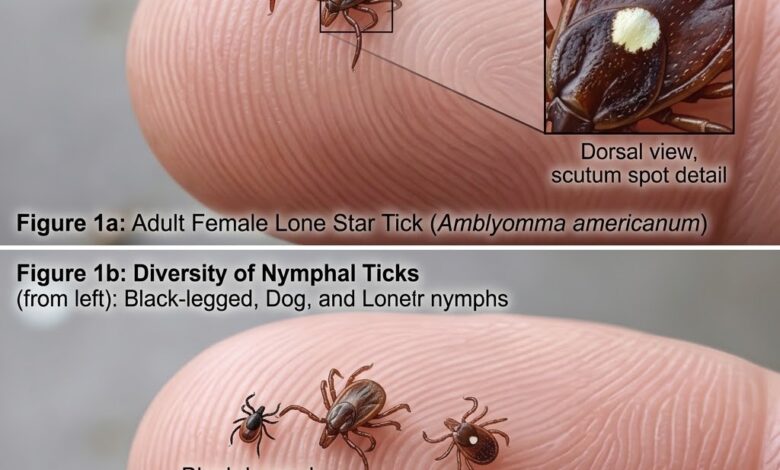
After what seemed like a peaceful day exploring the woods, the last thing a parent expects to discover is a tiny insect attached to their child’s skin. But that is exactly what happened when a mother noticed a small tick crawling on her son’s leg. At first, it looked like an ordinary insect. Then she noticed something unusual — a small, bright white spot on its back.
That tiny marking immediately caught her attention. What appeared to be an insignificant insect was actually a type of tick commonly known as the Lone Star tick. The female Lone Star tick is recognizable by the distinctive white or silvery spot on the middle of its back. Because ticks can be extremely small, they can easily go unnoticed, especially after spending time outdoors.
The Lone Star tick has attracted particular attention because of its potential connection to alpha-gal syndrome, a condition in which a person can develop an allergy to a sugar molecule found in most mammals. In some people, a bite from a Lone Star tick has been associated with the development of this allergy.
What makes alpha-gal syndrome unusual is that symptoms may not appear immediately after eating certain foods. Some affected people can experience reactions several hours after consuming mammalian meat such as beef, pork, or lamb. Symptoms can range from hives and stomach discomfort to more serious allergic reactions.
However, seeing a Lone Star tick does not automatically mean that someone will develop alpha-gal syndrome. Most tick bites do not result in a serious illness, and discovering a tick is not a reason to panic. The important thing is to remove an attached tick promptly and safely.
If a tick is attached to the skin, the recommended approach is to use fine-tipped tweezers and grasp the tick as close to the skin as possible. Pull upward with steady, even pressure rather than twisting or crushing it. After removal, clean the bite area and your hands with soap and water or an appropriate antiseptic.
It is also important to pay attention to how the person feels afterward. If unusual symptoms such as fever, rash, significant fatigue, or signs of an allergic reaction develop following a tick bite, medical advice should be sought. When speaking with a healthcare professional, mentioning the tick exposure can provide useful information.
The best protection is prevention. Before heading into wooded, grassy, or brush-covered areas, people can reduce their risk by wearing long sleeves and long pants, using an appropriate insect repellent, and staying away from areas with dense vegetation when possible. After returning home, checking the skin, hair, clothing, and other areas where ticks can hide is another simple but important step.
Parents should pay particular attention to children after outdoor activities because ticks can hide in places that are easy to overlook. A careful check of the legs, arms, scalp, behind the ears, waist, and other exposed or hidden areas can help identify ticks early.
A tiny white spot on a tick may seem like an insignificant detail, but recognizing the distinctive appearance of the Lone Star tick can help people take the right precautions. Outdoor adventures do not need to become frightening experiences. With a little awareness, careful tick checks, and prompt action when a tick is found, families can continue enjoying nature while reducing the risks associated with tick bites.




