

United Airlines Draws the Line: Could Playing Audio Without Headphones Get You Kicked Off a Flight?
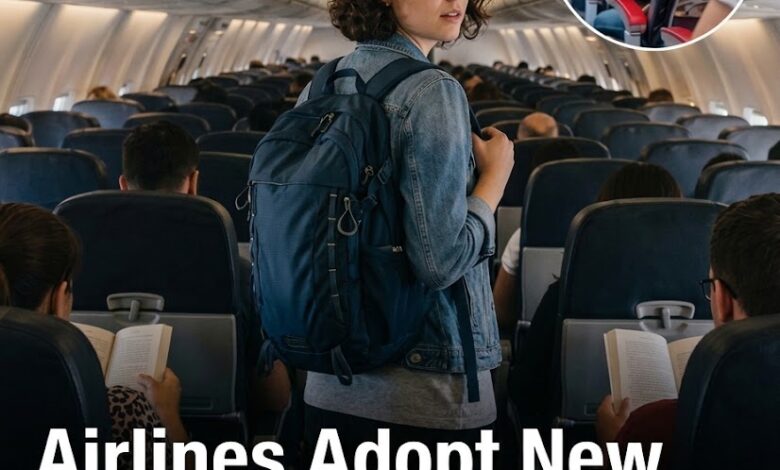
The cabin used to be a place where passengers could settle into their seats, read a book, watch a movie, or simply close their eyes and enjoy a little peace. Today, that quiet can disappear in seconds. TikTok videos play at full volume, FaceTime conversations echo between rows, and fellow travelers are left wondering whether anyone remembers basic airplane etiquette.
Now, United Airlines has taken a tougher stance on disruptive passenger behavior, bringing renewed attention to a problem that has frustrated travelers for years.
For many passengers, the issue is painfully familiar. Someone nearby starts watching videos without headphones, playing music aloud, or holding a loud conversation through their phone. At first, other travelers may exchange uncomfortable glances and hope the noise will stop. Some politely ask the person to turn the volume down, while others choose to remain silent to avoid an argument.
But on a crowded flight, there is often nowhere to escape.
Unlike a noisy café or a busy public square, an airplane offers limited personal space. Passengers cannot simply move to another room, step outside, or find a quieter corner. Once the aircraft is in the air, everyone is sharing the same enclosed environment for the duration of the journey.
That is why a seemingly small act, such as playing a video through a phone’s speaker, can quickly become a source of tension.
United’s approach signals that disruptive behavior involving personal electronic devices is not simply a matter of individual preference. It also raises an important question about the balance between personal freedom and the responsibility passengers have toward everyone sharing the cabin.
For flight attendants, clearer rules can make a difference. Instead of relying entirely on repeated requests for courtesy, crew members need an established basis for addressing behavior that interferes with other passengers’ comfort or disrupts the flight.
A clear policy may also reduce disagreements. When expectations are communicated in advance, passengers have less room to argue that playing audio aloud is harmless or that everyone else should simply tolerate it.
Still, stricter enforcement is likely to generate debate.
Some travelers may worry that airline rules could be applied inconsistently or that minor disagreements might escalate unnecessarily. Others may question how much authority crew members should have when dealing with behavior that falls short of a serious safety threat.
Those concerns make clarity and fair enforcement especially important. Passengers should understand what conduct is prohibited, what consequences may follow, and how crew members are expected to respond.
At the same time, respecting other travelers does not require complicated rules. Using headphones, keeping phone conversations at a reasonable volume, and following crew instructions are simple ways to make a shared journey more comfortable.
The bigger issue is that airplane etiquette has struggled to keep pace with a world in which smartphones have become constant sources of entertainment and communication. What feels normal to one person can become an unavoidable disturbance for dozens of others.
A passenger may think they are simply watching a short clip. The person seated beside them may hear every second of it. A quick video call may seem harmless to the caller, but the conversation can carry across several rows.
On a crowded aircraft, individual choices have consequences for everyone nearby.
Ultimately, the debate surrounding United’s stance is about more than headphones. It is about whether passengers can share a confined space without turning their personal habits into someone else’s problem.
Air travel already demands patience. Delays, cramped seating, and long hours in the air are difficult enough without adding unnecessary noise to the experience.
For travelers who value a peaceful cabin, stronger enforcement may feel like a welcome change. For those concerned about airline overreach, the key question will be how consistently and reasonably the rules are applied.
One thing, however, should not be controversial: passengers should not have to compete with someone else’s phone speakers throughout an entire flight.
So before pressing play on your next video at 35,000 feet, remember that your fellow passengers did not purchase tickets to become your audience.
Pack your headphones, respect the people around you, and let the cabin remain a shared space—not a personal loudspeaker.




