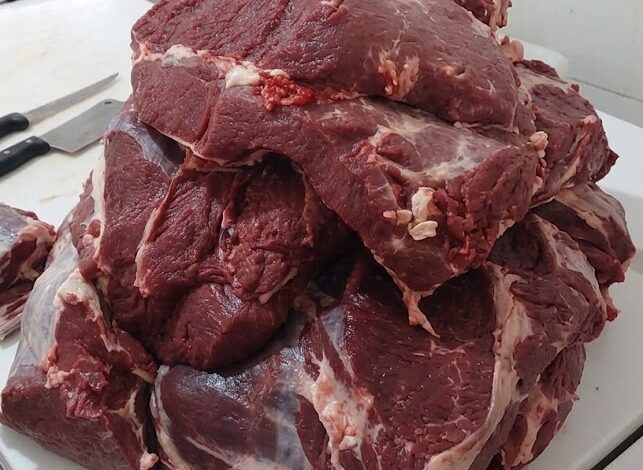
That bright, cherry-red steak sitting under the supermarket lights certainly looks appealing.
Then you notice the package beside it. The beef is darker—perhaps deep burgundy, purplish-red, or slightly brown in places.
Most shoppers make the same decision almost automatically.
They choose the red one.
It looks fresher. It looks cleaner. It looks safer.
But there is an important detail many consumers don’t realize:
The color of raw beef is not a reliable freshness meter.
That darker package you instinctively avoid can sometimes be just as fresh as the bright-red steak sitting next to it. What you’re seeing is often the result of ordinary chemistry rather than a simple indication of whether the meat is good or bad.
The key player is a protein called myoglobin.
Myoglobin is found in muscle tissue and helps store oxygen. It is also largely responsible for the color we associate with beef. When the amount of oxygen around myoglobin changes, the appearance of the meat can change as well.
That means beef can look dramatically different without its actual quality changing to the same degree.
Freshly cut beef that has had limited exposure to oxygen can appear dark purplish-red. Vacuum-packed beef is a common example. To someone accustomed to the bright-red appearance of supermarket steaks, that deep color can seem unusual.
But unusual does not automatically mean spoiled.
Once the package is opened and the surface of the meat is exposed to oxygen, its color can become brighter and more distinctly red. This process is commonly known as blooming.
The meat didn’t suddenly become fresher.
It simply interacted with oxygen.
This is one reason shoppers should be cautious about judging beef entirely by appearance.
We are naturally inclined to associate bright red with freshness and brown with spoilage. The reality is more complicated. Beef can undergo normal color changes during storage, and a darker surface does not automatically mean that the meat is unsafe.
At the same time, bright-red beef isn’t automatically safe simply because it looks attractive.
Color can provide a clue, but it cannot provide a final verdict.
There are many other factors that deserve attention when you’re choosing meat.
Packaging is one of them.
A damaged wrapper, broken seal, or leaking package should make you reconsider your purchase. Packaging is designed to protect the product, and visible damage can compromise that protection.
If liquid is leaking from a package, selecting another one is the sensible choice. Raw meat juices can potentially spread microorganisms to shopping carts, reusable bags, kitchen counters, and other foods.
Also pay attention to packages that appear unusually swollen or otherwise abnormal.
You don’t need to determine exactly why the package looks strange while standing in the supermarket aisle.
Simply choose a different package.
There are plenty of other options.
Temperature is another factor that shoppers often overlook because it isn’t as obvious as color.
Raw beef is a perishable food and needs to remain properly chilled. If refrigerated meat has been sitting somewhere it clearly shouldn’t be, don’t assume that placing it back into a refrigerator immediately makes everything safe again.
Time and temperature matter because microorganisms can multiply more quickly when perishable foods remain in unsafe conditions.
This is also why it makes sense to pick up refrigerated meat toward the end of a grocery trip whenever possible.
You don’t want raw beef sitting in a shopping cart for an extended period while you spend another hour browsing other aisles.
Buy refrigerated and frozen products later in the trip, then head home and refrigerate or freeze them promptly.
If you’re traveling a considerable distance—especially during hot weather—an insulated bag or cooler can help keep perishable foods cold.
Once you’re home, proper storage becomes the next priority.
And there’s another issue that has nothing to do with color:
Cross-contamination.
Imagine a package of raw beef develops a small leak inside your grocery bag. The juices come into contact with lettuce or another food that will later be eaten without cooking.
The problem isn’t necessarily the beef itself.
The problem is that microorganisms from the raw meat may have been transferred to food that won’t receive a cooking step capable of destroying them.
Keep raw meat separated from ready-to-eat foods during shopping, transportation, and storage. In the refrigerator, position raw meat so that any leakage cannot drip onto foods stored underneath.
These habits may sound simple.
That’s precisely why they’re useful.
Food safety usually isn’t about one complicated trick. It’s about consistently following several small precautions that work together.
So, what about brown beef?
The answer isn’t as simple as “brown means bad.”
A limited amount of browning doesn’t automatically mean that beef has spoiled. Changes in myoglobin and oxygen exposure can produce different shades during normal storage.
However, significant discoloration accompanied by other signs of deterioration deserves greater caution.
The important point is to consider the whole picture.
Look at the condition of the package.
Check the relevant date information.
Consider how the meat has been stored.
Think about whether it has remained properly refrigerated.
Pay attention to its odor after opening.
Look at the texture.
Don’t reduce all of those factors to a single question:
“Is it red?”
A bright-red surface does not prove safety.
A darker surface does not automatically prove spoilage.
Once the package is opened, odor can provide another useful clue. Spoiled meat may develop an unpleasant or unusual smell. However, smell has limitations as well.
Some packaging methods can produce a temporary odor when first opened that may dissipate after exposure to air.
More importantly, the absence of an unpleasant smell does not guarantee that meat is safe.
Certain harmful microorganisms don’t produce obvious changes in smell, color, or appearance.
That’s why the traditional “sniff test” should never be your only food-safety method.
And you should never taste questionable raw or undercooked meat simply to determine whether it’s safe.
Texture can also offer information. If meat develops an unusual sticky, tacky, or slimy surface—particularly when combined with other signs of deterioration—discarding it is generally the safer choice.
Saving a few dollars isn’t worth risking foodborne illness.
But there is an opposite problem too.
Some shoppers become so concerned about normal color changes that they throw away perfectly usable beef.
That creates unnecessary food waste and wastes money.
Understanding the science behind meat color can help avoid both extremes.
You don’t need to panic every time you see a brown patch.
You also shouldn’t blindly trust meat just because it looks bright red.
The prettiest steak isn’t necessarily the best steak
Another supermarket misconception is that the most attractive package must contain the best piece of beef.
Not necessarily.
The right cut depends on what you’re planning to cook.
A premium steak may be an excellent choice for grilling or pan-searing. But buying an expensive steak doesn’t necessarily make sense if you’re preparing a slow-cooked stew.
Different cuts contain different amounts of fat, connective tissue, and muscle fibers. They respond differently to different cooking methods.
Some tougher cuts can become exceptionally tender when cooked slowly.
Some leaner cuts work better with quicker cooking methods and can become dry if overcooked.
Learning the differences between cuts can save you more money than obsessing over tiny differences in color.
Marbling is another characteristic worth understanding.
Those small streaks of fat running through the muscle can contribute to flavor, tenderness, and juiciness in many beef cuts.
For certain steaks, marbling can be a useful factor when comparing packages.
But even marbling isn’t a universal measure of “best.”
The ideal choice depends on the recipe, cooking method, budget, and your personal preferences.
The goal isn’t to buy the package that looks the most expensive.
It’s to buy the product that makes sense for the meal you’re actually preparing.
What happens once the beef reaches your kitchen?
At home, safe handling becomes far more important than supermarket appearance.
Keep raw beef refrigerated until you’re ready to prepare it.
Wash your hands after handling raw meat.
Use clean utensils and surfaces.
Keep raw meat away from foods that will be eaten without further cooking.
Clean cutting boards and countertops appropriately after preparation.
And despite a common kitchen habit, you generally don’t need to wash raw beef before cooking it.
Rinsing raw meat can cause contaminated droplets to splash around the sink and nearby surfaces, potentially spreading microorganisms rather than removing the risk.
Cooking—not washing—is what makes properly handled meat safer.
Cooking temperature is another area where appearances can be deceptive.
Many people judge doneness by cutting into meat and looking at the center.
Pink means undercooked.
Brown means finished.
But color isn’t reliable enough to make that determination.
A food thermometer is a much better tool.
It measures the internal temperature directly instead of asking your eyes to make a guess.
Safe cooking temperatures depend on the type of beef being prepared. Whole cuts and ground beef are not identical from a food-safety perspective because grinding can distribute microorganisms throughout the meat.
Follow current food-safety guidance for the particular product you’re cooking, including any recommended resting time.
Don’t rely entirely on whether the center “looks done.”
And don’t assume that a burger is safe simply because it has lost its pink color.
Visual appearance can be misleading in the kitchen just as easily as it can be in the supermarket.
The bigger lesson
There is a broader idea hidden behind all of this.
Humans love simple shortcuts.
Red means fresh.
Brown means spoiled.
Expensive means better.
Natural means safer.
A familiar-looking package means trustworthy.
These shortcuts make shopping faster, but food safety doesn’t always fit into such simple categories.
Some of the most important information about food safety is invisible.
You cannot look at a steak and see every microorganism that might be present.
You cannot examine ground beef and determine its complete temperature history.
You cannot tell from several feet away whether a package has been properly refrigerated throughout the entire supply chain.
That’s why food safety depends on multiple layers of protection.
Proper refrigeration.
Intact packaging.
Clean handling.
Separation of raw and ready-to-eat foods.
Appropriate storage.
Thorough cooking.
Each step addresses risks that our eyes, nose, and instincts cannot always detect.
And that’s ultimately what makes a careful shopper different.
The supermarket meat counter is designed to display food attractively.
Your job is to look beyond the display.
That doesn’t mean color is completely meaningless.
Color can still provide useful information when considered alongside everything else. A dramatic or unusual change may deserve closer attention.
But it should be treated as one piece of evidence, not the entire decision.
So the next time you’re standing beneath bright supermarket lights comparing two packages of beef, resist the automatic urge to grab whichever one is reddest.
Pause for a moment.
Read the label.
Check the relevant dates.
Inspect the package.
Make sure the seal appears intact.
Consider the cut.
Compare the price per weight.
Keep the meat cold during transportation.
Then store, handle, and cook it properly once you get home.
Because beef doesn’t become safe simply because it looks beautiful.
And it doesn’t automatically become dangerous because its color has changed.
The best shopper isn’t necessarily the person who finds the reddest steak.
It’s the person who understands what that color does—and doesn’t—actually tell them.
Sometimes the darker package is perfectly normal.
Sometimes the bright-red package deserves a closer look.
And sometimes the most important information isn’t visible at all.
Color catches your eye.
Good food-safety habits protect your meal.