He Opened the Wall to Find the Source of a Strange Smell and Was Stunned…………..

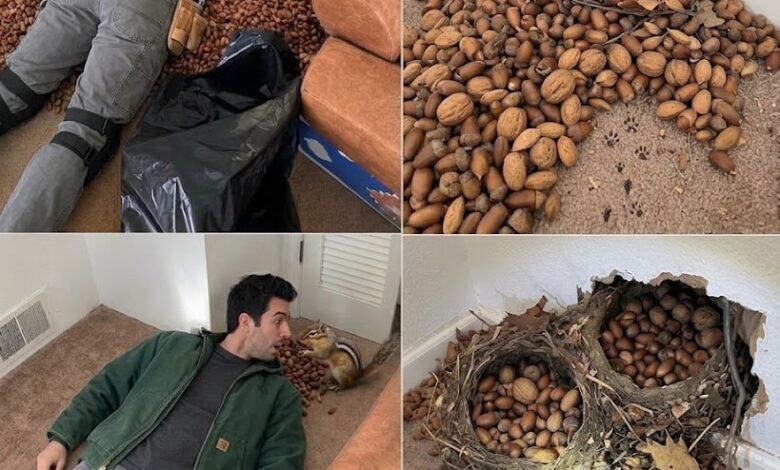
Pest-Control Expert Opens a California Wall—and Nearly 700 Pounds of Acorns Come Pouring Out
At first, the holes in the house looked like ordinary signs of woodpecker activity. Small openings in the exterior siding might have seemed like a minor repair, but nobody expected what was hiding behind them. When pest-control professional Nick Castro began investigating the problem inside a California home, he uncovered a discovery so unusual that it transformed a routine service call into one of the strangest jobs of his career.
As the wall was opened, acorns began spilling out.
And then more came.
What initially appeared to be a small wildlife issue turned out to involve an astonishing quantity of stored food. According to the account, approximately 700 pounds of acorns had accumulated inside the home’s wall cavity, filling around eight large trash bags. The hidden stockpile had been built gradually, concealed behind the very siding that homeowners might have assumed was simply damaged.
A Hidden Pantry Behind the Siding
The culprit was a woodpecker using openings in the home’s exterior to store its food. Rather than leaving a few acorns in a visible location, the bird had apparently been depositing them in the wall cavity over time, turning an unexpected part of the house into a massive storage space.
From the outside, there was little indication of just how much had accumulated. The small holes offered no obvious clue that hundreds of pounds of acorns were waiting behind the wall.
For Castro, who had reportedly worked in pest control for more than two decades, the discovery was an extraordinary surprise. What began as an investigation into exterior damage became a large-scale cleanup involving bag after bag of acorns.
The sheer volume raised an obvious question: how could a bird gather and store so much food without the homeowners realizing what was happening?
The answer lay in the gradual nature of the activity. A small amount of food deposited at a time can go unnoticed, especially when the storage area is hidden from view. Over time, however, repeated visits can turn a seemingly insignificant opening into the entrance to a surprisingly large stockpile.
How Woodpeckers Turn Homes Into Food Storage Sites
Some woodpecker species are known for storing acorns in trees, wooden structures, and other suitable spaces. Acorn woodpeckers, in particular, create communal food-storage sites by placing acorns into holes in wood.
A house with accessible gaps or damaged siding can unintentionally provide a similar opportunity. Once a bird discovers a suitable location, it may continue returning to it, depositing food until the space becomes crowded.
In this case, the home’s wall cavity had apparently provided enough room for an enormous accumulation. The result was a striking reminder that wildlife behavior can sometimes create problems that are difficult to detect from the outside.
Although woodpeckers are a natural part of the environment, repeated activity around a home can cause damage and allow moisture or other pests to enter through openings in the exterior. That makes identifying and addressing the underlying cause important for homeowners.
The Bird Was Left Unharmed
Despite the unusual discovery, the response focused on removing the stored acorns and preventing the same situation from happening again. According to the account, the woodpecker was left unharmed, the openings were patched, and new siding helped make the area less accessible as a storage site.
The repair was important because simply removing the acorns would not necessarily prevent a bird from returning to the same location. Closing access points and repairing damaged siding can help reduce the likelihood of a repeat occurrence.
Homeowners who notice recurring holes in exterior walls should therefore avoid treating each opening as an isolated cosmetic problem. The damage may point to repeated wildlife activity, and investigating it early could prevent a much larger cleanup later.
If an active nest or protected wildlife is involved, a qualified professional can help determine the appropriate, humane approach.
A Small Hole, an Astonishing Discovery
Perhaps the most remarkable part of the story is how little the exterior damage revealed about what was hidden inside. The openings were small, but the accumulation behind them was enormous.
Nearly 700 pounds of acorns, reportedly filling eight large trash bags, had turned an ordinary wall into an unexpected pantry. It was a discovery that demonstrated how wildlife can make use of overlooked spaces—and how a minor-looking problem can conceal a much bigger one.
One question remains particularly intriguing: how long had the woodpecker been building its stockpile?
Without a confirmed timeline, there is no way to know exactly how many trips it took or how long the process lasted. But the scale of the discovery suggests a remarkable amount of repeated activity, with each small delivery contributing to a hidden mountain of food.
For Castro, the job became an unforgettable example of the surprises that can emerge during pest-control work. For homeowners, it offers a practical lesson: when unexplained holes keep appearing in a house, it may be worth investigating what lies beyond the siding before the problem grows.
Sometimes, the strangest discoveries are hiding in the most ordinary places—and all it takes is opening a wall to reveal them.