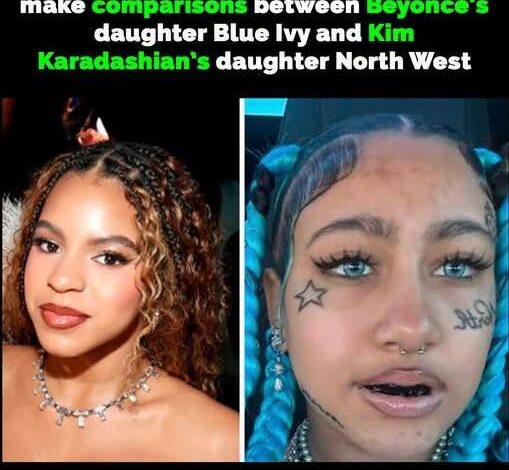
What started as a simple comparison between two celebrity children soon turned into something far more concerning.
A viral discussion comparing Blue Ivy Carter and North West spread quickly across social media, with countless people analyzing their appearances and using those images to draw conclusions about parenting, family dynamics, and childhood. What could have remained a lighthearted conversation about fashion, Halloween costumes, or personal style instead became another reminder of how easily children are pulled into debates they never chose to be part of.
North West’s playful Halloween look led some people to speculate about challenges within her family, while others praised Blue Ivy’s appearance as evidence of better parenting or a healthier home environment.
Neither opinion was based on facts.
Both were built on assumptions formed from a single moment captured in a photograph.
Amid thousands of comments, one important truth was often forgotten:
Both girls are children.
They didn’t start the online debate.
They didn’t ask to become examples in conversations about divorce, parenting, or celebrity culture.
They were simply enjoying moments of childhood—just like any other child should be able to do.
Social media has made it easier than ever to create stories from isolated images. A photo may show an outfit, a hairstyle, or a facial expression, but it cannot reveal the strength of family relationships, the values being taught at home, or the care and support children receive behind closed doors.
Those are things no photograph can truly capture.
Growing up is a journey of exploration.
Children try different styles.
They wear costumes.
They copy their favorite artists, movie characters, or friends.
They express themselves through creativity, imagination, and play.
These are normal parts of childhood—not evidence to support public arguments about their families.
Thankfully, many people online recognized this and encouraged others to look beyond appearances.
Instead of comparing the girls or assigning deeper meanings to their looks, they reminded everyone that celebrity children deserve the same respect as any other child: the freedom to grow, make mistakes, discover who they are, and mature without constant judgment from millions of strangers.
That reminder speaks to a much larger issue.
Children should never be expected to carry the weight of adult disagreements.
Whether their parents are married, divorced, co-parenting, or living separate lives, children are individuals with their own identities—not symbols created to support someone else’s opinion.
Fame doesn’t change that reality.
If anything, it makes protecting a child’s privacy, dignity, and emotional well-being even more important.
Public figures understand that public attention often comes with their careers.
Their children never signed up for that attention.
Yet they grow up surrounded by cameras, headlines, viral posts, and endless commentary that can shape public perception long before they are old enough to understand it.
As adults, we have a responsibility to do better.
Before commenting on or sharing images of children online, it’s worth asking a simple question:
Is this conversation helping the child, or am I simply using the child to support my own opinion?
If the answer is the second, perhaps it’s time to rethink the conversation.
Every family has its own story—one filled with experiences, challenges, love, growth, and moments that outsiders can never fully understand. A single image cannot measure the strength of a family, the quality of parenting, or the happiness of a child.
Kindness, empathy, and patience matter far more than quick judgments.
Children deserve the chance to grow without every stage of their lives becoming public entertainment or a source of online debate. The digital world never forgets, and words shared today can leave lasting impressions tomorrow.
In the end, this isn’t just a story about Blue Ivy or North West.
It’s a reflection of how easily society turns children into symbols, headlines, and talking points instead of seeing them for what they truly are.
They are simply children.
Perhaps the real measure of our character isn’t how quickly we form opinions, but how willingly we choose compassion over criticism and protect the innocence of children who never asked to live under the spotlight.