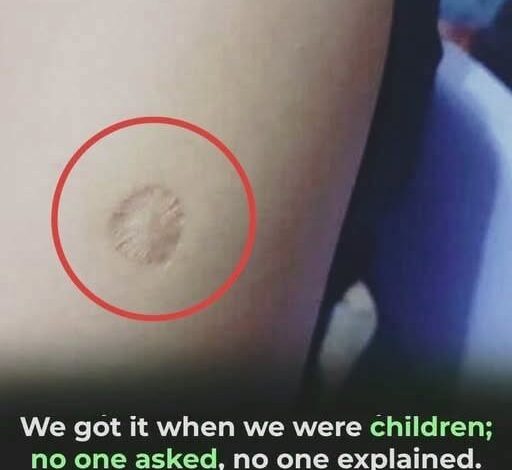
That small, circular scar on the upper arm of many older adults is far more than a mark on the skin.
It is a lasting symbol of one of the greatest achievements in the history of medicine—and a reminder of a time when one of the world’s deadliest diseases was finally defeated.
For centuries, smallpox was one of humanity’s most feared illnesses. Caused by the variola virus, it spread rapidly from person to person, bringing high fever, extreme fatigue, and a painful rash that developed into fluid-filled blisters across the body. Those who survived were often left with permanent scars, vision loss, or other lifelong complications.
For millions of others, survival was never an option.
Smallpox claimed an estimated hundreds of millions of lives throughout history, devastating families, overwhelming communities, and leaving entire populations living in fear of the next outbreak. Before vaccines became widely available, few diseases inspired as much dread.
Defeating smallpox required an unprecedented global effort.
Healthcare workers traveled through cities, rural villages, and some of the world’s most remote regions, carrying vaccines wherever they were needed. Schools, community centers, clinics, and temporary vaccination sites became places where millions of people lined up to receive protection—not only for themselves but for those around them.
The smallpox vaccine was unlike many vaccines used today.
Instead of a traditional syringe, it was commonly administered with a bifurcated (two-pronged) needle. The needle was dipped into the vaccine solution before a healthcare worker made a series of quick, shallow punctures in the skin.
Within days, a small blister usually appeared at the vaccination site.
As it healed, it often left behind a distinctive circular scar that remained visible for life. Over time, that small mark became a quiet badge of protection against one of history’s most devastating infectious diseases.
Year after year, vaccination campaigns expanded across the globe.
Governments, scientists, healthcare professionals, and international organizations worked together to identify outbreaks, trace infections, vaccinate vulnerable communities, and stop the virus before it could spread further. Through relentless surveillance and widespread immunization, smallpox cases steadily declined.
Then came a moment that changed medical history.
In 1980, following years of coordinated international efforts led by the World Health Organization (WHO), smallpox was officially declared eradicated worldwide.
To this day, it remains the only human infectious disease to have been completely eradicated through vaccination.
Once the virus was eliminated from natural circulation, routine smallpox vaccination programs were gradually discontinued in most countries. As newer generations grew up without needing the vaccine, the familiar circular scar became increasingly rare.
Today, that small mark often tells a story.
For many older adults, it brings back memories of school vaccination campaigns, neighborhood health clinics, or family members who remembered the fear that smallpox once caused.
For younger generations, it serves as a powerful reminder of a chapter in history they never had to experience.
It shows that diseases once thought impossible to defeat can be controlled—and sometimes even eliminated—through scientific discovery, global cooperation, and a shared commitment to public health.
The scar itself may be small.
Its significance is immeasurable.
It represents the dedication of scientists who spent years studying infectious diseases, healthcare workers who crossed mountains, deserts, and oceans to deliver vaccines, and millions of ordinary people who chose to participate in one of the largest vaccination campaigns ever undertaken.
More than anything, it reminds us that progress is possible when science, determination, and international cooperation come together.
That tiny circle on someone’s arm isn’t just evidence of a vaccination received decades ago.
It is a living piece of history.
A quiet reminder that one of humanity’s greatest victories wasn’t won on a battlefield—it was achieved through research, compassion, public trust, and the collective determination to protect future generations from a disease that once seemed impossible to stop.