

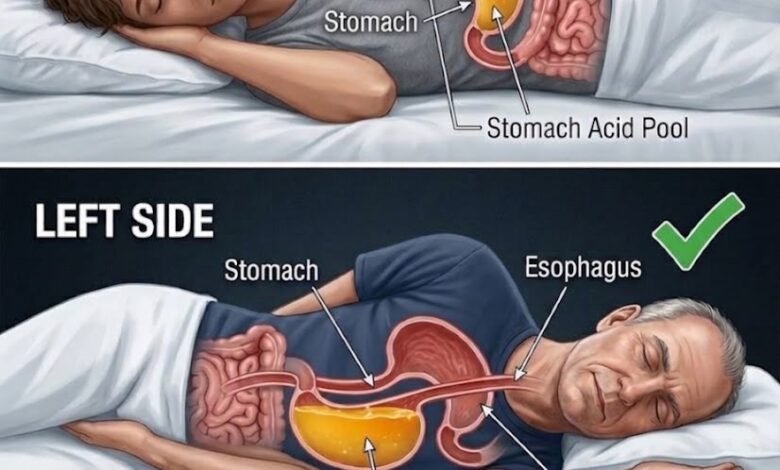
Sleeping on Your Right Side May Make Acid Reflux Worse—Here’s Why
Many people focus on diet, medication, and lifestyle changes when trying to manage acid reflux, but one important factor is sometimes overlooked: sleeping position. Digestive health experts have found that the way a person lies down at night may influence how easily stomach contents travel back into the esophagus, potentially affecting symptoms such as heartburn and throat irritation.
Acid reflux occurs when stomach contents flow backward into the esophagus, the tube that carries food from the mouth to the stomach. Common symptoms include a burning sensation in the chest, a sour taste in the mouth, regurgitation, coughing, and throat discomfort. For some people, these symptoms become more noticeable at night because lying flat removes some of the assistance gravity provides in keeping stomach contents in the stomach.
Interestingly, research suggests that sleeping on the left side may help reduce nighttime acid reflux compared with sleeping on the right side. Although this does not affect everyone in the same way, the difference appears to be connected to the stomach’s natural position and the relationship between the stomach and the lower esophagus.
Why Your Sleeping Position Matters
The stomach sits mainly in the upper-left portion of the abdomen, although its exact position and shape vary from person to person. The esophagus connects to the upper part of the stomach, near the junction where stomach contents can sometimes move backward.
When a person lies on their left side, the stomach’s position relative to the esophagus may make it more difficult for stomach contents to flow upward. This can help reduce the amount of acid reaching the esophagus and may shorten the time acid remains there during the night.
By contrast, lying on the right side can change this relationship in a way that makes reflux easier in some people. Research examining nighttime reflux has found that left-side sleeping is often associated with less acid exposure in the esophagus and faster acid clearance than right-side sleeping.
However, this does not mean that sleeping on the right side automatically causes acid reflux. Some people may sleep comfortably in that position without experiencing any digestive problems. Others may notice that their symptoms become more frequent or uncomfortable after lying down.
What Happens When You Lie Down After Eating?
Meal timing can be just as important as sleeping position. After eating, the stomach needs time to digest food. Lying down soon after a large meal may make it easier for stomach contents to move back toward the esophagus, particularly in people who are already prone to reflux.
Large meals, fatty foods, chocolate, caffeine, and other potential triggers may worsen symptoms in certain individuals. Triggers differ from person to person, so identifying which foods affect you personally can be more useful than following a long list of unnecessary dietary restrictions.
For people who experience nighttime symptoms, a practical approach is to finish eating at least three hours before going to bed. This gives the stomach more time to empty before the body moves into a horizontal position.
Simple Ways to Reduce Nighttime Acid Reflux
A few adjustments may help make nights more comfortable:
1. Try sleeping on your left side. If you regularly experience nighttime heartburn, experiment with left-side sleeping to see whether your symptoms improve.
2. Elevate the head of your bed. Raising the upper body with a wedge pillow or an appropriate bed elevation can help reduce reflux. Simply stacking several ordinary pillows may bend the body in a way that is less effective.
3. Avoid lying down immediately after meals. Aim to leave about three hours between your last meal and bedtime, especially if eating late tends to trigger symptoms.
4. Pay attention to personal food triggers. Keep track of meals and symptoms to identify patterns. You may not need to eliminate foods that do not cause you problems.
5. Consider other lifestyle factors. Smoking, excess body weight, and certain medications or medical conditions can contribute to reflux. A healthcare professional can help determine which changes are most appropriate for you.
When Should You Seek Medical Advice?
Occasional heartburn is common, but frequent or persistent symptoms may indicate gastroesophageal reflux disease (GERD), a condition that can require medical treatment.
Speak with a healthcare professional if reflux occurs regularly, disrupts your sleep, or continues despite lifestyle changes. Seek urgent medical attention for chest pain that is severe, new, or unexplained—particularly if it occurs with shortness of breath, sweating, dizziness, or pain spreading to the arm, jaw, or back. Such symptoms should not automatically be assumed to be acid reflux.
Difficulty swallowing, persistent vomiting, unexplained weight loss, or signs of gastrointestinal bleeding also warrant prompt medical assessment.
The Bottom Line
Your sleeping position may play a meaningful role in managing nighttime acid reflux. For many people who experience symptoms after lying down, sleeping on the left side, elevating the upper body, and avoiding meals close to bedtime can help.
Still, no single sleeping position guarantees relief, and sleeping on the right side does not mean you will develop a digestive disorder. The best approach is to pay attention to your symptoms, make practical adjustments, and seek medical advice if the problem persists.




