

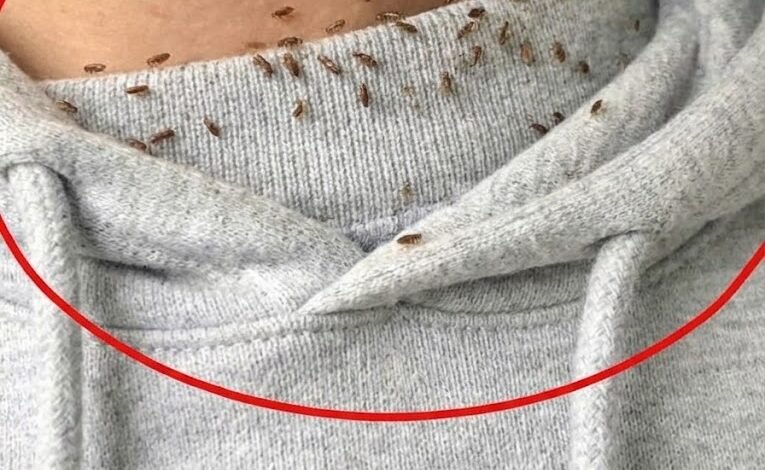
Shocking Head Lice Video Goes Viral in the Philippines, Raising Concerns About Infestation and Treatment
A disturbing video allegedly showing a severe head lice infestation on a Filipino tricycle driver has attracted widespread attention on social media, prompting discussions about personal hygiene, parasite prevention, and the importance of seeking treatment early.
The clip, which was reportedly shared on Facebook by a user identified as Primo Onipa before being deleted, appeared to show numerous tiny insects crawling around the back of the driver’s neck and onto his shirt. The footage left many viewers concerned about the man’s condition and raised questions about how severe head lice infestations can become when left untreated.
According to the account accompanying the video, the footage was shared to draw attention to the importance of addressing infestations rather than simply to embarrass the worker. However, the video’s original context and the details surrounding the man’s condition have not been independently established.
The incident also highlights an important distinction: head lice are a common parasitic problem, and having them does not automatically mean someone has poor personal hygiene. Anyone can develop an infestation, regardless of how frequently they bathe or wash their hair.
The Health Risks of a Severe Head Lice Infestation
Head lice are small parasitic insects that live on the human scalp and feed on small amounts of blood. Their eggs, commonly called nits, attach firmly to individual hair strands, often close to the scalp.
The most familiar symptom is itching, which develops as the scalp reacts to lice bites. However, some people experience little or no itching, particularly during an early infestation.
When lice remain untreated, persistent scratching can damage the skin and create small wounds. These breaks in the skin can become infected with bacteria, potentially leading to tenderness, redness, swelling, or crusting.
Severe infestations can be distressing and may require careful, repeated treatment. In exceptionally heavy or prolonged cases, substantial blood loss has been associated with iron-deficiency anemia, although this is uncommon and should not be presented as an inevitable consequence of head lice.
The important message is that persistent symptoms, extensive infestation, or signs of infection deserve appropriate medical attention.
How Do Head Lice Spread?
Contrary to a common misconception, head lice are not a reliable indicator that someone is unclean. They can affect people of different ages, backgrounds, and living conditions.
The insects spread primarily through direct head-to-head contact with an infested person. This can happen among family members, children playing together, or people whose heads come into close contact during everyday activities.
Transmission through shared personal items, such as combs, brushes, hats, and helmets, is possible, although it is generally less common than direct contact.
Head lice do not jump or fly. They crawl from one hair-covered head to another, and they depend on a human host to survive.
Although lice can occasionally end up on bedding, clothing, or upholstered furniture, they generally survive only a short time away from the scalp. Consequently, extensive disinfection of an entire home is usually unnecessary.
Effective Ways to Treat Head Lice
The good news is that head lice can usually be treated successfully with appropriate products and careful follow-up. Treatment may involve a medicated lice treatment or systematic wet-combing, depending on the product available, the person’s age, and local health guidance.
Here are several practical steps that can help:
1. Use an appropriate lice treatment. Follow the instructions on a locally approved product carefully. Some treatments require a second application after a specified interval because certain products do not kill every egg.
2. Comb the hair carefully. A fine-toothed lice comb can help remove live lice and eggs. Wet-combing with conditioner is one commonly recommended approach, but it requires repeated, thorough sessions.
3. Check close contacts. Household members and others with frequent head-to-head contact should be checked. Treat those who have an active infestation according to the product instructions or professional advice.
4. Clean recently used personal items. Wash pillowcases, bedding, clothing, and towels used recently by the affected person. Items that cannot be washed can generally be set aside for an appropriate period according to local health guidance.
5. Clean combs and brushes. Remove hair and visible debris, then clean the tools appropriately. Follow manufacturer instructions and recognized public-health guidance rather than relying on excessively hot water that could cause burns.
6. Seek medical advice when necessary. If treatment fails, the infestation is extensive, or the scalp appears infected, consult a healthcare professional or pharmacist for guidance on the next steps.
Avoid applying household insecticides, agricultural pesticides, or flammable substances to the scalp. These can cause serious harm and are not appropriate substitutes for approved lice treatments.
Do You Need to Disinfect Your Entire Home?
Not usually. Because head lice depend on a human host and do not survive for long away from the scalp, the risk of catching them from household surfaces is relatively low.
Concentrate on recently used bedding, clothing, towels, combs, and other items that have had close contact with the affected person’s head. Routine vacuuming of furniture or car seats may be reasonable, but aggressive chemical spraying and extensive household fumigation are unnecessary.
For public-facing workers who regularly wear shared or borrowed helmets, avoiding shared headwear when possible and ensuring that equipment is cleaned appropriately can be sensible precautions. Still, direct head-to-head contact remains the principal route of transmission.
Why Awareness Matters for Public-Facing Workers
Tricycle drivers, jeepney operators, retail employees, and other public-facing workers interact with many people throughout the day. However, simply serving large numbers of passengers does not mean a worker is especially likely to transmit head lice.
The more useful approach is to recognize symptoms, make treatment accessible, and encourage people to seek help without embarrassment or stigma.
Public discussion of an infestation should also respect the affected person’s dignity. A shocking video may attract attention, but it cannot establish the person’s overall health, personal habits, or circumstances.
The Bottom Line
The viral video described in reports from the Philippines has renewed attention to severe head lice infestations and the importance of timely treatment. However, the specific circumstances shown in the clip should be treated cautiously unless confirmed by reliable sources.
Head lice are common, treatable parasites—not proof that someone is dirty or irresponsible. Persistent itching, visible lice, skin damage, or signs of infection should prompt appropriate treatment and, when necessary, professional medical advice.
With effective treatment, careful follow-up, and sensible cleaning practices, most infestations can be managed without expensive procedures or drastic measures. The goal should be to protect people’s health while ensuring that those affected receive help rather than humiliation.




