

Why Are Some Electrical Outlets Installed Upside Down? The Surprising Reason Behind This Common Feature
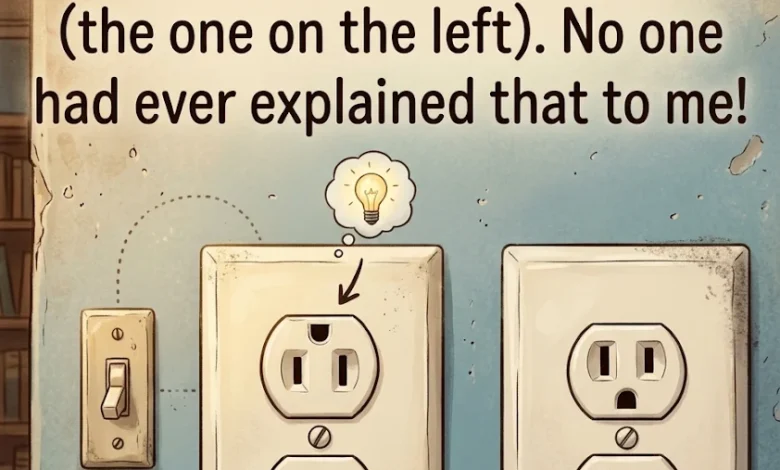
Have you ever walked into a home, hospital, office, or commercial building and noticed an electrical outlet that appeared to be installed upside down? Instead of the familiar arrangement, with two vertical slots above a round grounding hole, the outlet has its grounding hole facing upward.
At first glance, it might look like an electrician made a simple installation mistake. But that unusual position can actually be intentional. In fact, electricians sometimes choose this arrangement for practical reasons involving safety, electrical identification, and workplace preferences.
Although the difference may seem insignificant, there are several interesting explanations behind it.
1. A possible safety advantage
One of the most frequently discussed reasons for installing an outlet with the grounding hole facing upward involves electrical safety.
A standard three-prong electrical receptacle has three connections: hot, neutral, and ground. The grounding connection provides a path for fault current, helping protective devices such as circuit breakers operate when an electrical fault occurs.
When the grounding hole faces upward, the grounding prong of an inserted plug sits above the two other prongs. Supporters of this arrangement point out that if a plug begins to loosen and a small metal object falls behind it, the object may contact the grounding prong before reaching the energized connections.
Depending on the circumstances, this could reduce the chance of certain dangerous electrical contacts or short circuits.
However, this should not be mistaken for complete protection. An upside-down outlet does not eliminate the risk of electric shock, and loose plugs or exposed electrical connections can be dangerous in either orientation. Proper installation, intact equipment, and appropriate electrical protection remain far more important than which direction the grounding hole faces.
2. Identifying special electrical circuits
Another reason involves buildings where different outlets serve different electrical systems.
In hospitals, commercial facilities, and other large buildings, some receptacles may be connected to emergency backup power, while others receive electricity through the ordinary building supply. Electricians and facility managers may use visual identification methods to help distinguish between these systems.
In some locations, outlet orientation can be one part of that identification system. For example, a particular orientation might be used to distinguish certain receptacles from ordinary ones.
However, this is not a universal rule. An outlet with its grounding hole facing upward does not automatically mean it is connected to an emergency generator, backup battery, or special electrical circuit. Identification practices vary, and labels, colors, documentation, and other installation details may be needed to determine what a receptacle actually supplies.
3. Electrical codes generally allow either orientation
Many homeowners assume that electrical outlets must always be installed with the grounding hole facing downward. Surprisingly, that is not generally the case under the U.S. National Electrical Code.
Standard receptacles can commonly be installed in either orientation, provided the installation meets applicable electrical requirements and the manufacturer’s instructions.
This means an outlet with the grounding hole facing upward is not automatically evidence of poor workmanship. It may simply reflect the electrician’s preferred installation method or the conventions followed by a particular contractor.
The familiar ground-down arrangement is widespread, but widespread practice does not necessarily mean it is the only acceptable arrangement.
4. Why do most people expect the grounding hole to face downward?
Part of the explanation is simply familiarity.
Most people grow up seeing electrical outlets installed with two vertical slots at the top and a round grounding hole underneath. Over time, that arrangement becomes so familiar that anything different can look incorrect.
Some people even describe the traditional arrangement as resembling a little face, with the two slots acting as eyes and the grounding hole appearing like a mouth.
Because of this familiar appearance, an upward-facing grounding hole can seem strange, even when the installation is perfectly intentional.
Electricians may also follow particular workplace standards, building conventions, or personal preferences when deciding which orientation to use.
5. What should homeowners actually watch for?
Although outlet orientation can be interesting, it is not the most important thing to consider when checking electrical safety.
Homeowners should pay attention to warning signs such as:
- Receptacles that feel loose or move when a plug is inserted or removed.
- Cracked, broken, or damaged outlet covers.
- Burning smells or unusual heat around an outlet.
- Sparks, buzzing sounds, or visible signs of electrical damage.
- Plugs that repeatedly fall out or fail to make a secure connection.
These problems deserve attention regardless of whether the grounding hole faces upward or downward.
If an outlet appears damaged or behaves unusually, avoid using it and arrange for a qualified electrician to inspect it. Never attempt to turn a receptacle around or modify its wiring without the proper training and precautions.
The bottom line
An electrical outlet with its grounding hole facing upward is not necessarily upside down in the sense of being incorrectly installed. It may reflect a deliberate safety consideration, a building’s identification practices, or simply an electrician’s preferred orientation.
The important lesson is that appearances can be misleading. A small difference in an everyday household feature may have a practical explanation, but the direction of an outlet alone cannot tell you whether it is safe, properly wired, or connected to a special power supply.
So the next time you notice one of these unusual outlets, you might think twice before assuming someone made a mistake. Sometimes, what looks like an installation error is simply another way of doing the job.




