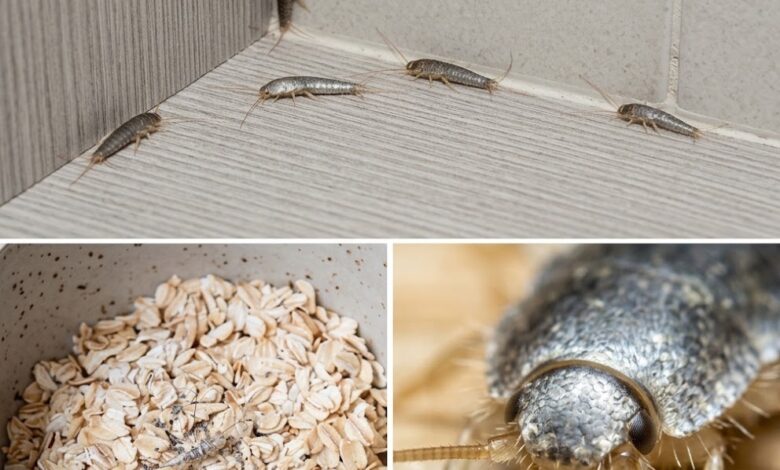
That Tiny Silver Bug in Your Bathroom Might Be Telling You Something
Turning on the bathroom light late at night and suddenly noticing a tiny, silvery insect dart across the floor can be quite surprising. Before disappearing beneath a cabinet or slipping into a crack, it may appear to wiggle its way across the surface almost faster than the eye can follow.
The insect may be a silverfish—a small, wingless household insect recognized by its flattened, tapered body, long antennae, and three tail-like bristles at the rear. Its shiny, silver-colored scales and unusual swimming-like movement are responsible for its distinctive name.
Fortunately, silverfish are generally not dangerous to humans or household pets. They do not normally bite or sting and are not considered significant transmitters of disease. However, seeing them repeatedly can be a reason to investigate your home. Their presence often means they have found a combination of moisture, darkness, shelter, and food that allows them to survive.
Why Do Silverfish Appear in Bathrooms?
Silverfish are attracted to dark and humid environments. Bathrooms can provide almost everything they need, particularly when ventilation is poor or moisture remains after showers.
They may also be found in:
- Basements and cellars
- Laundry rooms
- Kitchens
- Attics
- Closets
- Areas around plumbing
- Behind cabinets and appliances
- Storage spaces containing cardboard and paper
During the day, silverfish commonly remain hidden in cracks, gaps, and other sheltered areas. They are primarily active at night, which means you may have them in your home for some time before noticing one.
What Are They Eating?
Silverfish are capable of feeding on a surprisingly wide range of materials. Their diet can include substances containing starches, carbohydrates, and other organic material.
They may be attracted to paper, cardboard, book bindings, wallpaper paste, photographs, fabrics containing sizing, cereal, flour, crumbs, and other stored materials. They can also consume mold and organic debris found in damp environments.
Finding one silverfish does not automatically mean you have a major infestation. However, repeated sightings—especially in several rooms—may indicate that a suitable hiding place and food source are nearby.
Can Silverfish Damage Your Belongings?
Although they are not dangerous to people, silverfish can become troublesome because they may damage household belongings.
They can scrape or feed on materials such as:
- Books and book bindings
- Important documents
- Wallpaper
- Photographs
- Cardboard
- Paper products
- Certain fabrics
- Stored clothing
- Pantry products in vulnerable packaging
Damage may appear as irregular scraping or holes, yellowish marks, shed skins, scales, or small droppings. Books, photographs, documents, and other valuable paper items deserve particular attention if they are stored in humid areas.
Food should also be protected. If an insect has entered an open package of flour, cereal, grains, or pet food, it is safer to discard the affected product and clean the surrounding storage area.
The Most Important Step: Find the Moisture
If silverfish keep appearing, simply killing the insects you see may not solve the underlying problem.
Instead, investigate why the area is attractive to them.
Check for dripping faucets, leaking pipes, condensation, damaged seals, roof leaks, or moisture accumulating around walls and cabinets. Make sure bathrooms have adequate ventilation, particularly after hot showers.
In persistently damp areas, improving airflow or using a dehumidifier can make the environment less comfortable for silverfish. Even small improvements in humidity can make a difference when combined with proper cleaning and storage.
Clean Their Hiding Places
Decluttering can also help.
Remove unnecessary piles of newspapers, cardboard boxes, old magazines, and paper materials from damp storage areas. Keep books, documents, and clothing in dry locations whenever possible.
Regularly vacuum along:
- Baseboards
- Cabinet edges
- Closets
- Behind appliances
- Under furniture
- Around plumbing openings
- Cracks and corners
Vacuuming can remove insects, shed skins, eggs, and food particles that may otherwise support their population.
Where appropriate, seal cracks and gaps around walls, cabinets, and utility openings. Reducing the number of places where insects can hide can make long-term control easier.
How Can You Tell Where They Are Coming From?
Sticky monitoring traps can help identify areas with greater activity. Placing them along walls and near suspected hiding areas can provide useful information about where silverfish are traveling.
Pay attention to when and where you see them. A few sightings in one humid bathroom may point toward a localized moisture problem, while insects appearing repeatedly in closets, storage rooms, and other areas may indicate a broader issue.
Other insects, including firebrats, can sometimes resemble silverfish, so accurate identification is useful before choosing a treatment.
When Should You Call a Pest Professional?
If cleaning, moisture reduction, improved ventilation, and better storage do not reduce the activity, consider contacting a qualified pest-control professional.
Targeted pest-control products may sometimes be appropriate, but pesticides should always be used strictly according to their labels. Avoid excessive spraying, especially around food, children, pets, and food-preparation areas.
The goal should not simply be to kill the insects you can see. The more effective approach is to remove the conditions that allow them to live and reproduce.
It Doesn’t Mean Your Home Is Dirty
Seeing a silverfish does not mean your house is unhygienic, nor is there anything mysterious or supernatural about finding one.
Even a clean and well-maintained home can develop a humid corner, condensation problem, plumbing leak, or storage area that provides an ideal environment for these insects.
Think of a silverfish sighting as a small warning sign worth investigating. Rather than panicking, check for moisture, improve ventilation, organize storage, protect vulnerable belongings, and monitor the area.
A single silverfish may simply be an occasional visitor. But if they keep appearing, they could be pointing you toward a hidden moisture problem that deserves attention.