
What Happens If You Always Sleep on Your Right Side? The Answer May Surprise You………….

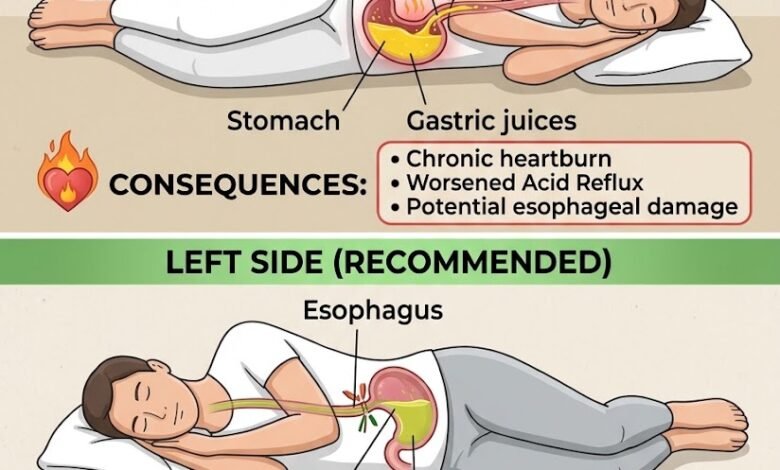
For a long time, I never gave much thought to the position I slept in. Like most people, I would simply lie down on whichever side felt most comfortable and drift off to sleep without a second thought. That changed when I came across an illustration suggesting that sleeping on your right side might influence digestion and trigger certain problems during the night. At first, the idea seemed surprising. How could something as ordinary as the way we sleep affect what happens inside our bodies? Curious to learn more, I began exploring the connection between sleeping positions and digestive health.
What I discovered was that body position can make a difference for people who experience acid reflux. The stomach produces acid to help break down food, but sometimes stomach contents flow backward into the esophagus, the tube connecting the mouth to the stomach. This can cause a burning sensation in the chest, a sour taste in the mouth, or discomfort that becomes particularly noticeable when lying down. The position of the stomach and the way gravity affects its contents can influence how easily this backflow occurs.
Interestingly, sleeping on the right side may make nighttime acid reflux worse for some people. When you lie on your right side, the relationship between the stomach and the opening to the esophagus can make it easier for stomach contents to move upward. This may increase the frequency or duration of reflux episodes, especially in people who already struggle with heartburn. The effect is not identical for everyone, but research suggests that sleeping position can be an important factor for those who experience symptoms regularly.
By comparison, sleeping on the left side is often recommended for people who suffer from nighttime acid reflux. In this position, the stomach sits in a way that generally makes it more difficult for acid to flow back into the esophagus. Gravity can also help keep stomach contents away from the opening leading upward. Some studies suggest that left-side sleeping can reduce acid exposure in the esophagus and help people experience fewer nighttime symptoms. For someone who frequently wakes up with heartburn, this simple adjustment may be worth trying.
However, this does not mean that sleeping on your right side is automatically harmful. Many people sleep comfortably in that position without experiencing digestive problems. The effect of sleeping posture depends on several factors, including whether someone has gastroesophageal reflux disease (GERD), how recently they ate, and whether they have other conditions that affect digestion. There is no single sleeping position that is perfect for everyone, and comfort should remain an important consideration.
Your evening habits can also influence how you feel when you wake up. Eating a large meal shortly before bed can leave the stomach full while you are lying down, potentially increasing the likelihood of reflux. Spicy or fatty foods, caffeine, and alcohol may trigger symptoms in some individuals. Maintaining a healthy weight, eating smaller evening meals when appropriate, and allowing around three hours between eating and lying down can help reduce nighttime discomfort for people prone to acid reflux.
Another useful strategy is to elevate the head of your bed if reflux frequently interrupts your sleep. Raising the upper part of your body with a suitable wedge or bed elevation can help limit the upward movement of stomach contents. Simply adding several pillows may not provide the same benefit, because it can bend the body in a way that does not adequately elevate the upper torso. Combining these changes with left-side sleeping may provide greater relief for some people.
It is also important to recognize when occasional heartburn becomes a persistent problem. If you regularly wake up with a burning sensation in your chest, a sour taste in your mouth, or difficulty sleeping because of reflux, consider discussing your symptoms with a healthcare professional. Frequent symptoms may indicate a condition that requires appropriate treatment rather than changes in sleeping position alone. Chest pain accompanied by shortness of breath, sweating, or pain spreading to the arm or jaw requires urgent medical attention because it may signal a heart problem rather than acid reflux.
Ultimately, discovering the connection between sleeping position and digestion reminded me that small everyday habits can sometimes have a meaningful effect on our comfort. Something as simple as turning onto your left side may help reduce nighttime heartburn if you are prone to acid reflux. At the same time, there is no reason to worry if you sleep on your right side and feel perfectly fine.
The key is to pay attention to your own body, notice patterns in your symptoms, and make practical adjustments when necessary. A more comfortable night may not require an expensive product or a complicated routine. Sometimes, understanding how your body responds to simple changes is enough to help you make better choices for your sleep and overall well-being.




