
Hidden Fangs in the Brush: Why Snake Identification Should Never Come Before Safety……………

A Snakebite in the Wilderness: Why Feeling Fine Doesn’t Always Mean the Danger Has Passed
One unexpected bite transformed an ordinary hunting trip into a frightening race to get medical help. Hidden among thick vegetation, the snake was difficult to spot, and even a photograph taken afterward could not establish exactly what kind of snake it was. The hunter faced a worrying uncertainty: although he had reached the hospital without severe symptoms, could he be certain that the danger was over?
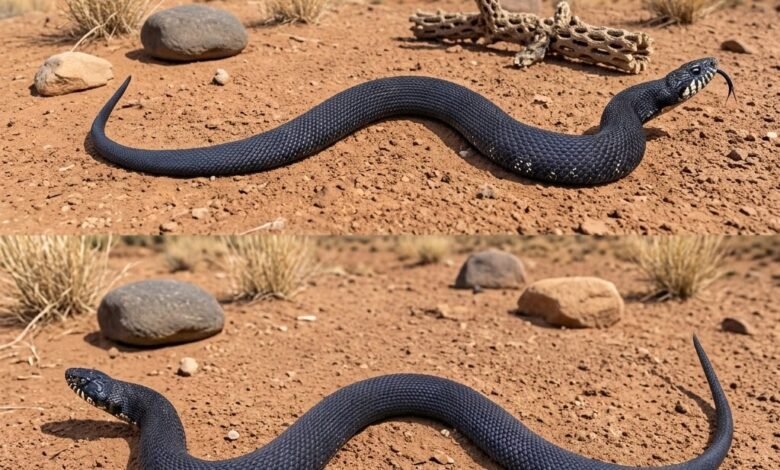
According to the account, the hunter was moving through dense brush when the snake struck. After the bite, he managed to take a photograph from a safe distance, leave the area, and seek medical attention. His initial evaluation reportedly revealed no severe signs of envenomation, offering some reassurance. However, the absence of serious symptoms did not automatically mean he was out of danger.
Medical professionals continued monitoring him because the effects of a snakebite can vary, and certain symptoms may take time to appear. The photograph also left an important question unanswered: the snake’s identity remained uncertain. The available account does not provide further details about his treatment or eventual recovery.
Why Immediate Medical Attention Matters
One of the most important lessons from this incident is that a person bitten by an unidentified snake should never rely on feeling well as proof that everything is fine. Some bites may cause little or no immediate harm, while others can lead to serious complications. Without an appropriate medical assessment, it can be difficult to determine the level of risk.
Trying to identify the snake should never take priority over getting help. Attempting to capture, kill, or handle it can expose the victim to another bite. A photograph may assist medical professionals, but only if it can be taken from a safe distance without delaying treatment or putting anyone at further risk.
What to Do After a Snakebite
If someone is bitten by a snake, move away from the animal and seek emergency medical care immediately, even if symptoms have not yet appeared. Keep the person as calm and still as possible, remove rings or other tight items near the affected limb before swelling develops, and follow emergency professionals’ instructions.
Avoid cutting the wound, sucking out venom, applying ice, or tying a tight tourniquet around the limb. Do not attempt to catch or kill the snake to identify it.
When spending time outdoors, particularly in areas with thick vegetation, wearing suitable footwear and watching where you place your hands and feet can help reduce the risk of an encounter.
The Lesson Behind the Encounter
The hunter’s experience highlights a crucial distinction: reassurance is not the same as medical clearance. An initially mild reaction may be encouraging, but it cannot replace professional evaluation and monitoring when a potentially dangerous snakebite has occurred.
In the wilderness, uncertainty can make an already frightening situation even more stressful. The safest response is not to wait until the symptoms become severe or until the snake has been identified. It is to get away from the animal, seek medical attention promptly, and let healthcare professionals determine what happens next.




