

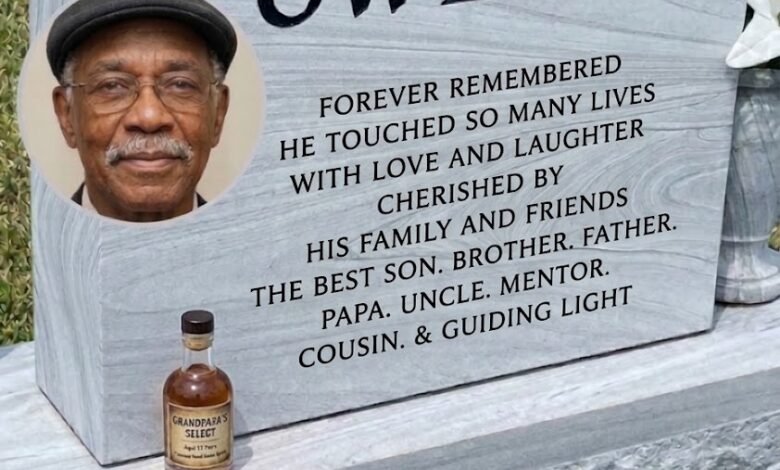
A Controversial Headstone Turned One Man’s Final Joke Into a Public Debate
A quiet cemetery became the center of an unexpected controversy after visitors discovered a hidden message carved into the headstone of Steven Paul Owens. What appeared to be an ordinary memorial contained an unusual twist: the first letters of each line spelled out a profanity. For his family, the inscription was a deliberate expression of his humor and personality. For others, it raised questions about what is appropriate in a place dedicated to remembrance and mourning.
According to the account, the acrostic was intentional. Owens’ family viewed the message as an inside joke, a final tribute that reflected the man they knew and loved. Rather than remembering him through conventional words of praise alone, they chose an inscription that preserved a part of his character that made him memorable to them.
But once the discovery spread online, a deeply personal farewell became a public argument. People who had never known Owens began weighing in, with reactions ranging from amusement and support to criticism and disapproval. Some viewed the message as disrespectful to the solemn atmosphere of a cemetery, while others saw it as an unconventional but heartfelt tribute.
When a Private Joke Becomes a Public Controversy
The disagreement grew more complicated when cemetery officials reportedly called for the inscription to be changed. Their concerns centered on the use of inappropriate language in a shared space, where visitors of different ages and backgrounds come to remember loved ones.
From that perspective, a cemetery is not simply a collection of individual memorials. It is a communal environment, and those responsible for maintaining it may have standards governing what can be displayed on headstones.
Yet Owens’ family faced a different concern. To them, the message was not merely profanity carved into stone. It was a personal joke connected to someone they had lost, carrying meaning that outsiders might not fully understand. Changing it could feel like altering a final expression of who he was.
Who Gets to Decide How Someone Is Remembered?
At the heart of the controversy lies a difficult question: should a memorial reflect the expectations of the wider community, or should the family have greater freedom to preserve the personality of the person they are grieving?
For some, respect means maintaining traditional language and solemn surroundings. For others, respect means remembering someone honestly, including their humor, irreverence, and refusal to fit conventional expectations.
Neither perspective can be understood fully without considering the role a memorial plays. A headstone serves as a public marker, but it can also hold deeply personal meaning for the people who visit it. What seems inappropriate to a stranger may be a treasured reminder to a grieving relative.
The dispute also highlights how the internet can transform a private family decision into a controversy far beyond its original setting. Once an unusual detail is shared widely, people may judge it without knowing the relationships, memories, or circumstances behind it.
A Final Farewell That Refused to Be Ordinary
Whether people find the inscription funny, offensive, or simply unusual, the story illustrates how differently people understand remembrance. Some prefer traditional expressions of love and loss, while others want memorials to capture the individuality of the person who has died.
For Owens’ family, the hidden message reportedly represented a familiar part of his personality. For cemetery officials, it raised concerns about what belongs in a shared public space. The disagreement brought those competing priorities into direct conflict.
Ultimately, the controversy is about more than a few letters carved into stone. It asks how much freedom families should have when creating a lasting tribute—and whether honoring someone’s memory sometimes means allowing that tribute to challenge convention.
Perhaps the most difficult question is not whether everyone approves of the joke, but whether a memorial must satisfy strangers to remain meaningful to the people who loved the person buried there.




