

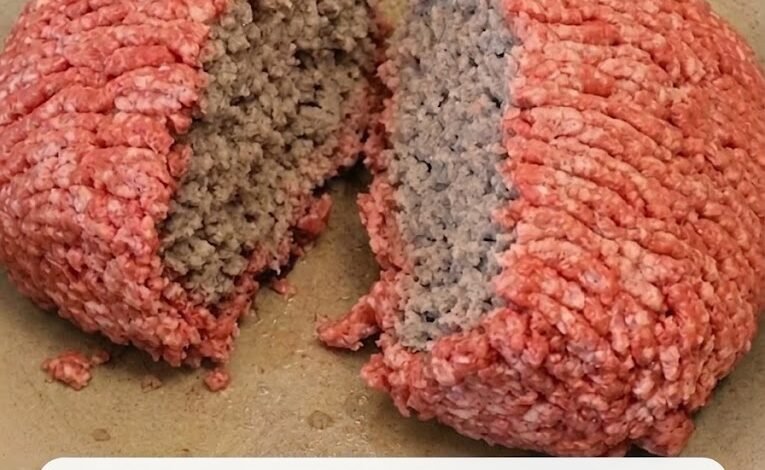
Why Ground Beef Is Bright Red on the Outside but Grayish-Brown in the Middle
Have you ever opened a package of ground beef and noticed something unusual? The outside looks bright red and fresh, but the meat in the center appears grayish-brown. At first, you might worry that the beef is old, spoiled, or improperly stored. You may even wonder whether the store has sold you meat that is no longer safe to eat.
Fortunately, this color difference is often caused by a natural chemical process rather than spoilage. However, color alone cannot tell you whether ground beef is safe to cook and eat.
The Science Behind Ground Beef’s Color
Ground beef contains a protein called myoglobin, which helps store oxygen in muscle tissue and gives meat much of its characteristic color. The appearance of this protein changes depending on how much oxygen is available and how it reacts with its surroundings.
When myoglobin comes into contact with oxygen, it forms a pigment called oxymyoglobin, which gives the meat a bright cherry-red appearance. This is the color many shoppers associate with fresh ground beef.
The outer portion of packaged meat generally has greater access to oxygen than the center. As a result, the surface may look bright red while the interior appears darker, purplish, or grayish-brown.
Inside a tightly packed package, oxygen may not penetrate deeply enough to produce the same bright-red color throughout the meat. Myoglobin can remain in a different chemical state, making the center look less vibrant even when the meat is still fresh.
Does Grayish-Brown Ground Beef Mean It Has Spoiled?
Not necessarily. A grayish-brown center can be a normal result of limited oxygen exposure, particularly when the outside of the meat remains red.
However, discoloration can also occur as meat ages or deteriorates. That is why it is important to consider more than appearance when deciding whether ground beef is safe to use.
Check the following factors:
- Smell: A strong sour, rancid, or otherwise unpleasant odor may indicate spoilage.
- Texture: Ground beef that feels unusually sticky or slimy should be treated with caution.
- Storage: Meat that has been left at unsafe temperatures or stored beyond recommended limits may be unsafe, even if it looks normal.
- Packaging: Damaged, leaking, or swollen packaging can be a warning sign, although packaging appearance alone cannot establish whether meat is safe.
Keep in mind that harmful bacteria can be present without producing an unusual smell, texture, or color. If you know the beef has been stored improperly, do not rely on its appearance to decide whether to eat it.
How to Handle Ground Beef Safely
Proper storage and cooking are essential for reducing the risk of foodborne illness.
Keep raw ground beef refrigerated at 40°F (4°C) or below and generally use it within one to two days of purchase. If you do not plan to use it within that period, freeze it promptly.
When cooking ground beef, use a food thermometer to verify that it reaches an internal temperature of 160°F (71°C). The meat’s color is not a reliable way to determine whether it has reached a safe temperature.
Also, wash your hands after handling raw beef, clean preparation surfaces and utensils, and keep raw meat separate from foods that are ready to eat.
The Bottom Line
Bright-red ground beef on the outside and grayish-brown meat in the middle may simply reflect differences in oxygen exposure and the natural chemistry of myoglobin. It does not automatically mean the meat is spoiled.
Nevertheless, color alone cannot guarantee safety. Consider the beef’s storage history, check for signs of spoilage, and cook it to the recommended internal temperature.
Understanding why meat changes color can help you avoid unnecessary worry while making safer decisions in the kitchen.




