
The Hidden Reason the “Good Side” of Your Fence Must Face Your Neighbor — Or Cost You Thousands……….

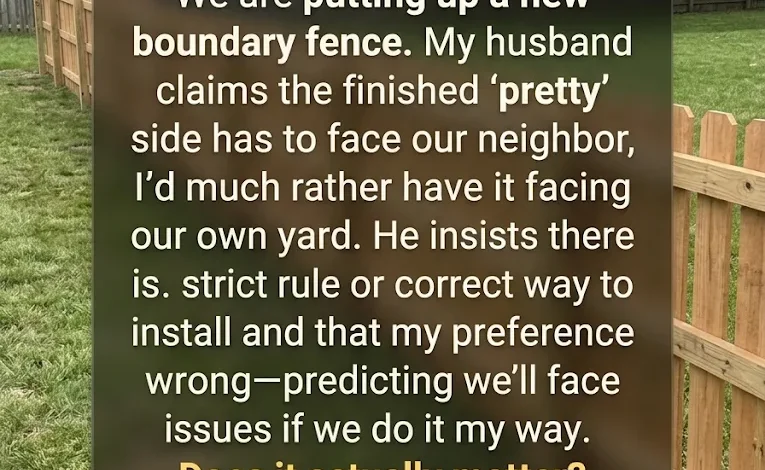
Why Should the Finished Side of Your Fence Face the Neighbor? The Rule Homeowners Often Overlook
Installing a new fence may seem like a straightforward home improvement project, but one small detail can create unexpected problems: which side of the fence should face outward?
Many homeowners assume they can choose whichever direction looks best from their backyard. However, in some American cities and homeowner associations, local regulations or community guidelines specify that the finished side of a fence must face neighboring properties or public streets.
Ignoring these requirements can lead to disputes, unexpected expenses, and, in certain circumstances, orders to modify or replace a fence that has already been installed.
Before purchasing materials or hiring a contractor, it is worth understanding why this seemingly minor detail matters.
1. Local Fence Rules May Determine Which Side Faces Outward
Some municipalities have what are commonly called good neighbor fence requirements. These rules generally favor placing the smooth, finished side of a fence toward the street or neighboring property, while the supporting posts and horizontal rails face inward toward the owner’s yard.
The reasoning is relatively simple: a fence is not only part of one homeowner’s property. Its appearance can also affect the surrounding neighborhood.
However, these requirements are not universal. Fence regulations vary considerably between cities, counties, and homeowner associations. Some communities have specific rules about fence orientation, while others focus primarily on height, materials, placement, and visibility.
Violating an applicable ordinance or HOA requirement can result in enforcement action. Depending on local regulations, homeowners may be required to make corrections, obtain additional approvals, or pay penalties.
That is why checking the rules before construction is much easier than discovering a problem after the fence has been completed.
2. Why the Finished Side Matters for Neighborhood Appearance
Imagine walking down a residential street where every property has a neatly finished fence facing the sidewalk. The result creates a consistent, attractive appearance.
Now imagine seeing exposed wooden posts, horizontal support rails, and uneven construction facing the street instead. Even if the fence is structurally sound, it may look unfinished compared with the surrounding properties.
This is one reason many communities encourage or require the polished side to face outward.
A well-finished perimeter can contribute to neighborhood curb appeal and create a more welcoming appearance. It also helps prevent neighboring homeowners from feeling as though they have been left looking at the less attractive side of someone else’s construction.
Although fence orientation alone does not determine a property’s market value, overall exterior maintenance and presentation can influence how buyers perceive a home.
3. Avoiding Disagreements With Neighbors
Fence construction can sometimes become a source of tension between neighboring households.
One homeowner may view the fence as a necessary way to improve privacy, protect pets, or create a defined outdoor space. The neighbor, however, may see an unfinished structure directly outside their windows or along their garden.
Showing the finished side outward can help avoid unnecessary disagreements and demonstrate consideration for the surrounding properties.
It is also helpful to discuss the project before construction begins. A quick conversation about the planned height, materials, location, and appearance can prevent misunderstandings later.
Good communication is particularly important when a fence runs along a shared boundary or when property lines are unclear.
4. Check Property Lines and Permits Before Building
One of the most expensive mistakes homeowners can make is constructing a fence without confirming exactly where their property ends.
A fence that accidentally crosses a boundary can create disputes involving land ownership, maintenance responsibilities, and removal costs.
Before beginning construction, homeowners should consider several important steps:
- Review local regulations: Check municipal requirements for fence height, materials, placement, and finished-side orientation.
- Check HOA guidelines: If the property belongs to a homeowners association, review its architectural and exterior improvement rules.
- Confirm property boundaries: Consult an accurate property survey rather than relying on assumptions or existing landscaping.
- Ask about permits: Some locations require approval before certain types of fences can be installed.
- Communicate with neighbors: Discuss the project beforehand, especially if the fence is close to a shared boundary.
These simple precautions can help prevent expensive corrections and unnecessary legal disagreements.
5. Consider a Double-Sided Good Neighbor Fence
What if you want your backyard to look just as attractive as the view from the street?
One possible solution is a double-sided fence, often marketed as a good neighbor fence. These designs are constructed to provide an attractive appearance on both sides, rather than leaving one household with exposed support rails.
Depending on the design, materials, and construction method, both neighbors can enjoy a more polished perimeter.
Double-sided fences may cost more than basic designs, but they can be a worthwhile investment for homeowners who value privacy, appearance, and long-term neighborhood harmony.
Before choosing one, make sure its design still meets local building requirements and any applicable HOA restrictions.
The Bottom Line
The direction your fence faces may seem like a minor construction decision, but it can affect local compliance, neighborhood appearance, and relationships with the people living next door.
Not every American community requires the finished side to face outward, and there is no single nationwide rule governing every residential fence. The requirements depend on local ordinances, property conditions, and community regulations.
The smartest approach is to check the rules, confirm your property boundaries, and discuss the project before construction begins.
A fence should provide privacy and security without creating unnecessary problems for the surrounding neighborhood. Sometimes, taking a little extra care with one small detail can save homeowners considerable money, time, and frustration later.




