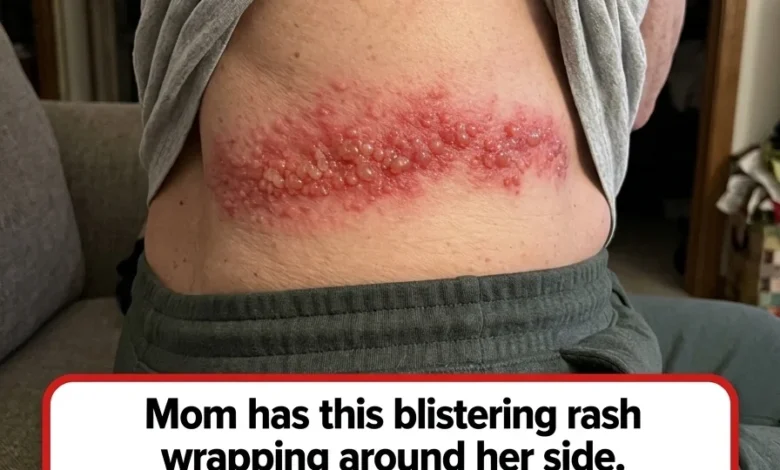
Mom has this blistering rash wrapping around her side. She says the burning pain is unbearable. ER wait is 8 hours!…………

Watching Mom Suffer From a Burning Rash Can Be Frightening: What Families Should Know About Shingles
Watching your mother struggle with a painful, burning rash can be deeply upsetting. Every wince, every complaint of discomfort, and every new patch of irritated skin can make the situation feel more frightening. When an emergency room visit means a long wait, families may find themselves wondering whether they should continue waiting, seek immediate medical attention, or try to make their loved one more comfortable at home.
One possible explanation for a painful, blistering rash is shingles, a condition that can cause significant discomfort and sometimes lead to complications. However, not every burning rash is shingles, and identifying the cause is an important first step toward choosing the right treatment.
Understanding the early symptoms, available treatments, and warning signs can help families make informed decisions rather than relying on guesswork.
What Is Shingles?
Shingles, also known as herpes zoster, is caused by the varicella-zoster virus—the same virus responsible for chickenpox.
After someone recovers from chickenpox, the virus does not completely disappear. It can remain inactive in nerve tissue for many years before becoming active again. When this happens, it can travel along a nerve and produce a painful rash on the skin.
Shingles is more common among older adults and people with weakened immune systems, although it can affect adults of different ages.
The condition often develops on one side of the body or face. The rash may appear as a group of small blisters, sometimes arranged in a band or strip along a particular area of skin.
Early Symptoms Families Should Recognize
Shingles does not always begin with a visible rash. In some cases, unusual sensations develop several days before the skin changes become noticeable.
Possible early symptoms include:
- Burning, tingling, or shooting pain.
- Increased sensitivity to touch.
- Itching or unusual skin discomfort.
- A painful or tender area on one side of the body.
- Headache, fatigue, or mild fever.
Afterward, a rash may appear, followed by fluid-filled blisters that eventually dry and form scabs.
Because other skin conditions can cause similar symptoms, a medical professional should evaluate a suspected case rather than relying on appearance alone.
Why Early Medical Treatment Matters
One of the most important things families should understand is that shingles has specific treatments that work best when started early.
Doctors may prescribe antiviral medicines such as acyclovir, valacyclovir, or famciclovir. These medications can help limit viral activity, shorten the illness, and reduce the severity of symptoms, particularly when treatment begins within approximately 72 hours after the rash appears.
Treatment may still be considered after that period, especially when new blisters are developing, the affected person has a weakened immune system, or the rash involves a high-risk area such as the eye.
Antiviral medication does not guarantee that complications will be prevented, but timely assessment can make an important difference.
Families should not wait for the rash to become severe before seeking medical advice.
When a Burning Rash Needs Urgent Attention
Although many cases of shingles can be managed with medical guidance and appropriate medication, certain symptoms require prompt attention.
Seek urgent medical evaluation if the rash:
- Appears on the forehead, nose, or around the eye.
- Is accompanied by changes in vision or eye pain.
- Develops near the ear with hearing changes, dizziness, or facial weakness.
- Spreads widely across the body.
- Occurs in someone with a significantly weakened immune system.
Emergency care is especially important if the person develops confusion, severe headache, neck stiffness, weakness, difficulty breathing, or other serious symptoms.
A rash near the eye deserves particular attention because shingles can affect the eye itself and potentially threaten vision.
Understanding the Pain
Shingles can cause more than ordinary skin irritation. The virus affects nerves, which explains why some people describe the sensation as burning, stabbing, or electric-shock-like pain.
Even light contact from clothing or bedsheets may feel uncomfortable. The affected skin can become extremely sensitive, making ordinary daily activities difficult.
For some individuals, pain continues after the rash has healed. This complication is called postherpetic neuralgia.
Postherpetic neuralgia occurs when nerve damage or irritation persists following the infection. The risk increases with age, making early medical assessment particularly important for older adults.
If pain continues after the blisters disappear, a healthcare professional can discuss treatments designed to manage nerve-related discomfort.
How Families Can Help Keep Mom Comfortable
While waiting for medical advice or following a doctor’s treatment plan, several gentle measures may help reduce discomfort.
- Use cool compresses: A clean, cool, damp cloth placed gently over the affected skin may provide temporary relief.
- Keep the rash clean: Wash the area gently and avoid scrubbing or irritating the blisters.
- Wear loose clothing: Soft, breathable fabrics can reduce friction against sensitive skin.
- Avoid scratching: Scratching or breaking blisters can increase irritation and the risk of secondary bacterial infection.
- Follow prescribed treatment: Give medications exactly as directed and ask a healthcare professional before adding over-the-counter pain relievers or creams.
Do not apply harsh chemicals, strong ointments, or unverified home remedies to the affected area.
Can Shingles Spread to Other People?
Shingles itself is not usually transmitted from one person to another as shingles. However, someone who has active shingles blisters can transmit the varicella-zoster virus to a person who has never had chickenpox or received protection through vaccination.
That person could develop chickenpox, not shingles, as a result.
Until the blisters have completely crusted over, it is sensible to keep the rash covered when possible, wash hands regularly, and avoid direct contact between the affected area and people who are particularly vulnerable.
These include newborn babies, pregnant people without immunity to chickenpox, and individuals with weakened immune systems.
Prevention and the Shingles Vaccine
Vaccination is an important way to reduce the risk of shingles and its complications.
The recombinant shingles vaccine, commonly known as Shingrix, is recommended in many countries for adults aged 50 and older, as well as certain younger adults with weakened immune systems. Local eligibility and vaccination guidance can vary.
The vaccine is intended to prevent future episodes and reduce the likelihood of serious complications. It is not a treatment for an active shingles outbreak.
Anyone who has already experienced shingles should discuss vaccination timing with a healthcare professional.
The Most Important Thing Families Should Remember
A painful, burning rash can be frightening, especially when it affects someone you love. Shingles is one possible cause, but other infections and skin conditions can produce similar symptoms.
The most helpful response is to seek an accurate diagnosis, ask about antiviral treatment as early as possible, and watch carefully for warning signs—particularly when the rash affects the face or eye.
Comfort measures may ease some of the discomfort, but they should never replace medical assessment when shingles is suspected.
Most importantly, families should not assume that a long emergency room wait means the situation is safe to manage without guidance. If serious symptoms appear, seek emergency care rather than waiting. Prompt attention can help protect health, reduce complications, and give someone who is suffering a better chance of recovering comfortably.