

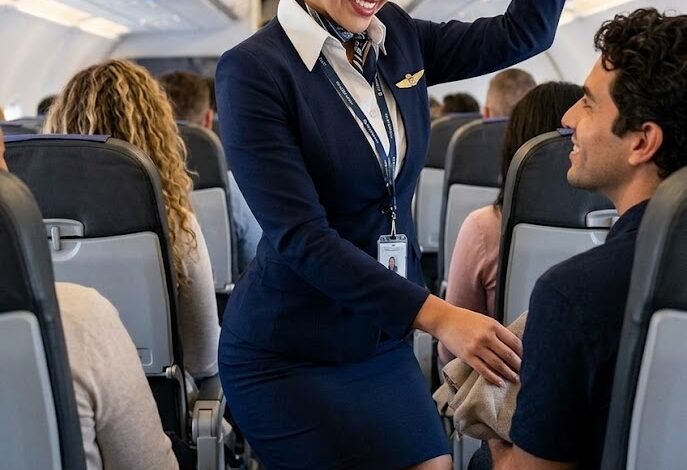
A Delayed Flight, a Heated Confrontation, and a Viral Video—But Was the Full Story Ever Told?
The flight was already running nearly an hour behind schedule.
Passengers were exhausted. Children were crying. Frustrated travelers were checking their phones, watching the minutes pass, and wondering when they would finally be able to continue their journeys.
Then, near the middle rows of the aircraft, a tense exchange caught the attention of several passengers.
A flight attendant appeared to be speaking firmly to a group of travelers, while voices could be heard rising nearby. Within moments, phones came out, and people began recording.
Nobody could have known how quickly those few seconds might spread online—or how fiercely strangers would debate what they believed had happened.
The Video That Divided the Internet
According to the account circulating online, the disagreement began during boarding, when tensions were already running high because of the delay.
Some passengers reportedly felt that the flight attendant seemed overwhelmed. Others believed certain travelers had become confrontational, making an already difficult situation worse.
The short video showed a heated exchange, but it offered only a limited view of the circumstances surrounding it. Viewers could see and hear a portion of the confrontation, yet the recording alone could not establish what had happened before filming began or explain every person’s actions.
Within hours, the clip began attracting attention across social media.
Some viewers defended the flight attendant, arguing that airline employees regularly deal with delays, demanding schedules, and difficult interactions while being expected to remain calm.
Others questioned whether the crew member’s approach was appropriate and argued that airline staff should maintain professional communication even when passengers are upset.
But one important question remained unanswered: How much of the actual incident did the video reveal?
A short recording can capture a genuine moment without providing enough information to explain the entire situation.
Social Media Reactions Came Fast
As the footage spread, online discussions quickly became divided.
Some people criticized the passengers involved, suggesting that frustration over a delayed flight should never become an excuse for disrespectful behavior. Others questioned why so many people immediately began recording instead of helping de-escalate the situation, provided it was safe to do so.
Meanwhile, other viewers focused on the pressures faced by cabin crew members.
Comments reflected the competing perspectives:
“We don’t know what happened before the video started.”
“Airline workers deal with more pressure than most passengers realize.”
“Professionalism matters, but employees deserve to be treated with respect, too.”
The debate soon moved beyond the individuals shown in the footage. It became a broader discussion about passenger behavior, workplace expectations, and the tendency to reach conclusions before all the facts are available.
The Pressure Behind the Uniform
For many travelers, flight attendants are the people who welcome them aboard, help them find their seats, and respond to their requests during a journey.
But their responsibilities extend far beyond customer service.
Cabin crew members receive training to support passenger safety, respond to medical emergencies, manage evacuations, address security concerns, and follow emergency procedures. They must remain alert and communicate clearly, including when conditions become stressful.
Delays, demanding schedules, passenger complaints, and unexpected conflicts can add to the pressure of an already demanding job.
That does not mean every action by an employee should automatically be excused. Rather, it highlights the importance of evaluating an incident fairly, considering the available evidence, and recognizing that airline workers are human beings operating within a safety-critical environment.
Passengers also deserve respectful treatment, clear communication, and appropriate responses to their concerns.
Both responsibilities can matter at the same time.
What Happens When an Airline Reviews a Viral Incident?
In situations involving complaints about employee conduct, an airline may review available recordings, witness accounts, crew reports, and other relevant information before deciding what action, if any, is appropriate.
If an internal investigation was confirmed in this particular case, its findings would be important in determining whether established workplace procedures were followed.
However, the account provided here does not identify the airline or include a verifiable company statement. Therefore, claims that an official investigation was launched, particular records were reviewed, or disciplinary action was taken would need independent confirmation before being presented as established facts.
That distinction matters because an online allegation is not the same as a confirmed finding.
For airlines, such incidents can also raise difficult questions about employee support, public communication, privacy, and the consequences of viral exposure.
Could There Be More to the Story?
In many viral controversies, different witnesses may describe the same event from different perspectives.
One person might focus on the visible confrontation. Another might remember an earlier disagreement. Someone else might notice a detail that never appears in the recording.
These perspectives can provide useful context, but individual accounts also need to be assessed carefully.
A longer video, credible witness statements, or an official review may help clarify what happened. Until such information is available, it would be unfair to assume that either the flight attendant or the passengers were entirely responsible based on a brief clip alone.
The most compelling version of a story is not necessarily the most accurate one.
The Hidden Cost of Going Viral
Public attention can have consequences long after a video stops trending.
An employee whose face appears in a widely shared clip may experience intense criticism, unwanted attention, and stress over how the incident could affect their career. Passengers who are identifiable in the footage may also face online scrutiny, even when viewers know little about their circumstances.
In the rush to comment, people sometimes share names, photographs, and personal information without considering the potential harm.
That is why privacy and fairness matter, particularly when an incident has not been fully investigated.
Accountability is important, but it should be based on reliable evidence rather than online pressure.
Why These Videos Spread So Quickly
Air travel can bring together tired people, tight schedules, crowded spaces, and unexpected disruptions. When a disagreement occurs in an enclosed cabin, even a brief confrontation can feel especially intense.
A video provides an immediate visual moment that people can react to and share. Strong emotions often encourage further discussion, while the missing context may receive far less attention.
As a result, public opinion can form long before the circumstances have been established.
This creates a challenge for everyone involved: viewers must decide what to believe, airlines may need to respond to concerns, and the people in the footage may find themselves facing consequences before the complete story is understood.
The Bigger Lesson Behind the Viral Moment
Whether this particular confrontation unfolded exactly as described remains something that would require reliable confirmation. Yet the broader issue is familiar in an age when nearly everyone carries a camera.
Recording an incident can sometimes provide valuable evidence and help establish accountability. At the same time, a short clip rarely captures every detail, and sharing it widely can affect real people in ways that are difficult to reverse.
The answer is not to dismiss every viral video or automatically defend everyone involved. It is to approach such footage with care, ask what information is missing, and wait for credible evidence before reaching firm conclusions.
Because sometimes, the internet sees the moment—but not the entire story behind it.




