
Kate Winslet Refused to Hide Her Body: From Cruel Hollywood Criticism to Embracing Her Natural Beauty……

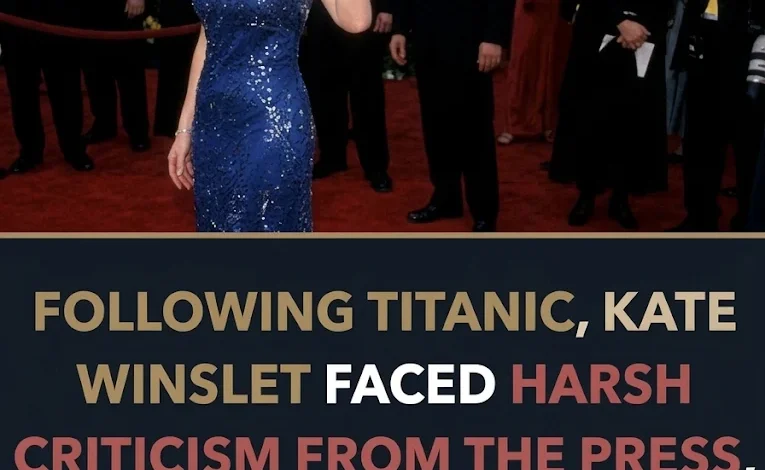
When Titanic turned Kate Winslet into an international superstar in 1997, she was just 22 years old. The film became a cultural phenomenon, and her performance earned widespread attention. But alongside the success came something far less pleasant: relentless public scrutiny of her appearance.
Instead of focusing entirely on her acting, tabloids and entertainment commentators began making cruel remarks about her weight and body. Winslet found herself facing criticism that many young actresses of the time were expected to tolerate as part of working in Hollywood.
One particularly hurtful incident involved a television presenter who reportedly suggested that she should have worn a dress two sizes larger at the 1998 Golden Globe Awards. Rather than celebrating her talent and achievements, some commentators seemed more interested in judging how her body looked in an evening gown.
The criticism was not simply an isolated experience. Winslet later explained how deeply the constant attention to her appearance affected her during those early years of fame.
Looking Back at the Body-Shaming Years
During a 2024 interview with 60 Minutes, Winslet became emotional while watching footage of the cruel comments made about her when she was younger. Seeing those moments again brought back the frustration of being publicly judged at a time when she was still developing her career and finding confidence in herself.
She described the treatment as absolutely appalling and made it clear that the criticism had stayed with her for years.
Winslet also revealed that she eventually confronted some of the people who had participated in the body-shaming. Her message was direct and powerful: “I hope this haunts you.”
Her response reflected more than anger over old headlines. It highlighted the lasting impact that public humiliation can have, particularly when someone is repeatedly criticized for something as personal as their natural appearance.
For many years, actresses were expected to maintain extremely narrow beauty standards. Their bodies were frequently discussed as though they were public property, with every outfit, photograph, and appearance becoming an opportunity for criticism. Winslet’s experience exposed how damaging those expectations could be.
A Different Kind of Confidence on the Set of Lee
Decades after Titanic, Winslet demonstrated just how much her attitude toward her appearance had changed.
While filming the 2024 movie Lee, in which she portrayed real-life war photographer and journalist Lee Miller, she encountered another moment when someone suggested that she adjust her posture during a bikini scene.
According to Winslet, a crew member suggested that she sit up straighter, apparently to conceal the natural folds of her stomach. Her response was immediate: “Not on your life!”
She refused to change her posture simply to make her body appear slimmer on camera.
For Winslet, the scene was not about presenting an airbrushed Hollywood image. She wanted to portray Lee Miller as a real woman, with a body that looked natural rather than carefully arranged to satisfy unrealistic expectations.
Her decision was especially meaningful because it represented a rejection of the same kind of appearance-based pressure she had experienced early in her career.
Why Her Decision Matters
Winslet’s approach reflects a broader conversation about how women are portrayed in films and how ageing is viewed in the entertainment industry.
For decades, Hollywood has often placed enormous pressure on actresses to maintain youthful appearances. Wrinkles, changing body shapes, and other natural signs of ageing have frequently been treated as imperfections that need to be hidden.
But real people do not remain physically unchanged throughout their lives. Bodies naturally develop and change with age, experience, health, and countless other factors.
Winslet has increasingly spoken about feeling more comfortable in her own skin and refusing to let other people’s expectations determine how she should look. At 48, she was no longer interested in hiding her wrinkles, curves, or the ordinary changes that come with getting older.
Her attitude sends an important message: an actress should be able to perform a role without feeling obligated to reshape her body to fit someone else’s idea of perfection.
From Being Judged to Setting Her Own Standards
There is something particularly powerful about the contrast between the young actress who faced relentless criticism after Titanic and the experienced performer who later refused to conceal her stomach during a film scene.
At 22, Winslet was dealing with public comments about her appearance while trying to establish herself as a serious actress. Years later, she had gained the confidence to challenge those expectations directly.
Her journey does not suggest that hurtful comments suddenly stop mattering or that confidence comes easily. Instead, it shows that people can learn to reject standards that once made them feel inadequate.
Kate Winslet’s story is ultimately about more than body image or Hollywood beauty standards. It is about self-respect, personal freedom, and the courage to stop apologizing for looking like a real human being.
The actress who was once criticized for her appearance is now using her experience to challenge the very expectations that caused so much pain. And perhaps her strongest message is the simplest one: women should not have to hide their natural bodies to deserve respect, admiration, or a place on screen.




