
An Old Box of Forgotten Family Keepsakes Sparked an Unexpected Kitchen Mystery………..

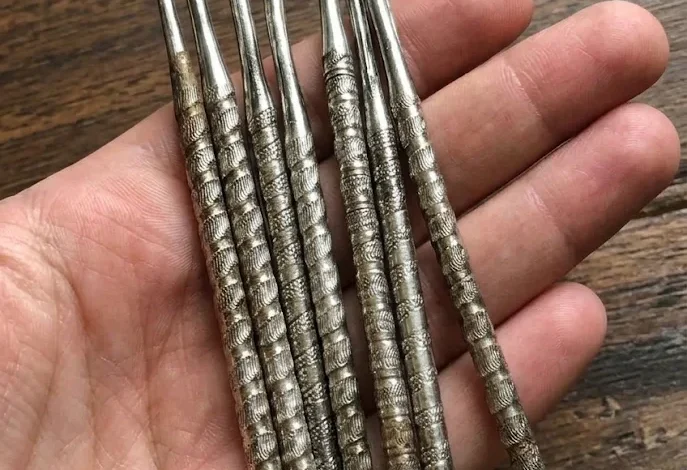
The Mystery of the Antique Wooden Nut Bowl: What Were Those Strange Pointed Metal Tools Used For?
Opening a dusty box of inherited family keepsakes can feel like stepping into another era. Among old photographs, forgotten ornaments, and objects whose original purpose has faded from family memory, you might discover something particularly unusual: a smooth, hand-carved wooden bowl accompanied by several slender metal tools with sharp, pointed tips.
To younger family members, these mysterious instruments might look like miniature surgical tools or pieces of an unfamiliar kitchen set. But to anyone who remembers traditional American dining rooms and family gatherings from the middle of the 20th century, they may be instantly recognizable.
They were likely part of an old-fashioned nut bowl and nutcracker set—a once-popular household accessory that turned an ordinary snack into a small family ritual.
A Wooden Bowl With a Practical Purpose
During the mid-20th century, wooden nut bowls were common features on coffee tables, dining tables, and living-room sideboards. Often made from attractive hardwoods such as walnut or maple, these bowls combined practical use with decorative appeal.
Their sturdy construction made them suitable for holding hard-shelled nuts, while their natural wood grain gave them a warm, traditional appearance. Some sets were simple decorative bowls, while others included specially designed metal nutcrackers built into or supplied alongside the bowl.
The purpose was straightforward: provide a convenient place to crack nuts, collect the shells, and keep the surrounding table relatively tidy.
Rather than serving guests a bag of ready-to-eat nuts, families could place a bowl of whole nuts on the table and enjoy preparing them together.
What Were Those Strange Pointed Tools?
The slender metal instruments were nut picks, sometimes called nut picks or nutmeat picks.
Their pointed ends were designed to reach into the narrow spaces inside cracked nutshells and help remove the edible nutmeat without crushing it or leaving small pieces behind.
Different nuts presented different challenges. Walnuts, pecans, and similar varieties could have complicated internal shapes, with edible pieces tucked into narrow corners. Fingers alone were not always enough to remove the meat neatly.
That is where the picks came in.
Their narrow tips could reach into crevices, loosen stubborn pieces, and help lift out the nutmeat. Some sets included different styles of picks, while others featured simple, slender metal tools that performed essentially the same job.
Although their appearance might seem unusual today, they were practical little utensils designed for a very specific purpose.
The Social Ritual of Cracking Nuts
Before packaged snacks became as convenient and widespread as they are today, preparing nuts at home often required a little effort.
Families might place a bowl of walnuts, pecans, almonds, or other whole nuts on the coffee table during holidays, weekend visits, or quiet evenings. Someone would crack the shells, another person might use a pick to remove the edible pieces, and everyone could enjoy the results.
The activity was not necessarily about efficiency. It was about slowing down and sharing a simple experience.
Children could watch adults demonstrate how to crack different nuts, guests could help themselves, and conversations could continue while the bowl gradually emptied. These small routines became part of the atmosphere of family gatherings.
For many people who grew up with these sets, the wooden bowl represents more than a kitchen accessory. It brings back memories of relatives, holiday celebrations, and evenings when preparing a snack was something people did together.
Why Are Collectors Interested in Them Again?
Today, antique wooden nut bowls and their accompanying tools attract interest from vintage kitchenware collectors, decorators, and people who appreciate traditional household objects.
Several features make them appealing.
- Natural materials: Walnut, maple, and other hardwoods offer attractive grain patterns and a warm appearance.
- Practical design: Unlike purely decorative antiques, many of these sets were created for everyday use.
- Nostalgic value: They remind people of family traditions and a slower approach to entertaining.
- Vintage craftsmanship: Older examples can feature distinctive shapes, carved details, and metalwork that are less common in modern mass-produced accessories.
Some people also enjoy bringing traditional foods into their everyday routines. Whole nuts can be a nutritious snack, providing fiber, healthy fats, protein, and various micronutrients. However, the antique bowl itself does not make nuts healthier; its appeal is primarily practical, decorative, and nostalgic.
Collectors should also inspect older sets carefully before using them. Cracked wood, loose metal fittings, corrosion, or damaged finishes can make an item unsuitable for food preparation. A beautiful antique may be better preserved as a display piece.
A Small Piece of Everyday History
What initially looks like a collection of mysterious objects may actually reveal an interesting part of domestic history.
The wooden bowl held the nuts, the nutcracker broke their shells, and the slender pointed picks helped retrieve the edible pieces. Together, these simple items made a practical and often social activity easier.
So, if you discover one of these unusual sets in an attic, an old cupboard, or a relative’s collection, take a closer look before dismissing it as a box of forgotten utensils.
Those tiny pointed tools were not medical instruments or mysterious antique gadgets. They were designed to help people enjoy one of life’s simplest pleasures: sitting together, cracking a few nuts, and sharing time with family and friends.




